CEASEFIRE

The newly brokered ceasefire between the United States and Iran is less a resolution than a pause in a rapidly escalating conflict. It is a two-week truce designed to halt immediate violence, reopen critical shipping lanes like the Strait of Hormuz, and create space for negotiations, not peace. Early signs already show how fragile it is.  Disagreement over whether the deal includes fighting in Lebanon, continued regional strikes, and competing interpretations of the terms all threaten to unravel it before diplomacy can take hold. Iran has signaled it still intends to assert strategic control in the region.  U.S. and allied leaders are scrambling to stabilize global shipping and prevent a wider war. In blunt terms, this ceasefire is not peace, it’s a high-stakes holding pattern where both sides are testing whether de-escalation is possible or simply the prelude to another round of conflict.

T. Michael Smith

wwwtmichaelsmith.com
Unpacking Trump’s Corruption

This Massive Corruption Isn’t Subtle

In any functioning democracy, corruption is supposed to be the exception, a scandal that shocks the system and triggers accountability. But under Donald Trump, the concern is not about isolated misconduct. It’s about a pattern—one so consistent, so normalized, that it looks less like deviation and more like design.

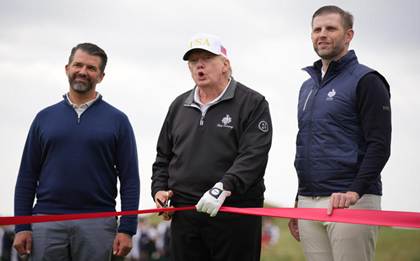
Start with the most visible layer: the blending of public power and private profit. During his presidency, Trump has refused to fully divest from the Trump Organization, an unprecedented move in modern American politics. Foreign governments, lobbyists, and political allies frequently spend money at Trump-owned properties. These are not abstract ethics debates—they are questions about whether U.S. policy could be influenced by who booked a ballroom or a hotel suite. Several litigants alleged that President Trump’s retention of certain business and financial interests violates the Foreign and Domestic Emoluments Clauses. The Supreme Court ultimately found these cases moot without addressing their merits.

CRYPTO

The pattern has evolved with new financial tools as well. Trump and his allies have increasingly intersected with the world of cryptocurrency—including the promotion of NFT collections like the Trump Digital Trading Cards and fundraising efforts tied to crypto-friendly donors and platforms. While not illegal on its face, this raises fresh transparency concerns: crypto transactions can obscure donor identities, making it harder to trace influence. Critics argue that this creates a modern workaround to campaign finance norms. Money can flow with fewer disclosure requirements and less public scrutiny.

CONVICTION FOR FRAUD

Then there are the legal cases. The Trump Organization criminal trial resulted in convictions for tax fraud, exposing years of financial manipulation inside Trump’s business empire. In civil court, a New York judge found Trump liable for fraud in a sweeping case brought by Letitia James. The judge found that asset values were routinely inflated to secure loans and deflated to reduce taxes. These findings didn’t emerge from partisan talking points—they came from courts applying evidence and law. The New York Appellate Division overturned the $500 million penalty, ruling the disgorgement was an excessive fine that violates the Eighth Amendment. The five-member panel all upheld findings that Trump and his company were liable, affirming that James acted within her authority and that injunctive relief to curb Trump Organization practices was appropriate. Subsequently, Trump had his DOJ indict James for mortgage fraud. The case was dismissed.

LACK OF CONSEQUENCES

And yet, what makes this era distinct is not just the allegations or even the legal outcomes—it’s the erosion of consequences. Despite indictments, civil judgments, and ongoing investigations, Trump has maintained his political standing, although his poll numbers continue to decline. That reality raises a deeper concern: when accountability mechanisms fail to deter, what remains of the rule of law?

Supporters argue that Trump is the target of politically motivated prosecutions, a victim of what they see as a weaponized justice system. That claim resonates in a polarized country where trust in institutions has sharply declined. But the counterargument is just as stark: if overwhelming evidence, court rulings, and documented conduct cannot establish a shared baseline of reality, then corruption becomes not just tolerated, but partisan. Plus, Trump is using the judicial system to target his enemies.

This is the real danger. Corruption in the Trump era isn’t only about one man—it’s about whether democratic institutions can enforce ethical boundaries when those boundaries are systematically tested. If the answer is no, then the precedent extends far beyond Trump himself. Because once corruption is normalized, it doesn’t stay contained. It becomes the blueprint.

Conclusion: The System Under Strain

What makes this moment dangerous is not just the volume of allegations or even the seriousness of individual cases. It is the cumulative stress placed on democratic guardrails. Corruption, when repeated often enough without decisive consequence, stops looking like corruption at all. It becomes reframed as strategy, dismissed as politics, or absorbed into partisan identity.

Under Donald Trump, the traditional mechanisms of accountability—courts, elections, congressional oversight, and public opinion—have all been tested simultaneously. Courts have issued rulings, yet enforcement can be slow and politically fraught. Elections have served as a form of accountability, yet false narratives about their legitimacy have weakened their authority. Congressional oversight has often fractured along party lines, limiting its ability to function as a neutral check. And public opinion, once a stabilizing force, has hardened into camps that interpret the same facts in fundamentally different ways.

The deeper issue, then, is not whether any single act crosses a legal threshold. It’s whether the system can still produce a shared understanding of wrongdoing—and act on it. If one side views investigations as justice while the other sees persecution, accountability itself becomes unstable.

This is where newer mechanisms—like opaque financial channels in cryptocurrency or self-reinforcing media ecosystems—compound the problem. They don’t just enable potential misconduct; they make it harder to detect, prove, and build consensus around. Corruption thrives not only in secrecy, but in confusion.

History suggests that democratic erosion rarely happens in a single dramatic collapse. It happens gradually, as norms weaken, lines blur, and each new breach becomes easier to justify than the last. The risk is not simply that one leader tests the limits—it’s that those tests redraw the limits for everyone who follows.

If there is a path forward, it lies in reasserting that the rule of law is not situational, and that transparency is not optional. That requires more than legal outcomes—it requires institutional courage, political will, and a public unwilling to normalize what once would have been disqualifying.

Because once corruption is no longer disqualifying, democracy itself is no longer self-sustaining.

T. Michael Smith

wwwtmichaelsmith.com
The SAVE Act

Election Security or Voter Barriers?

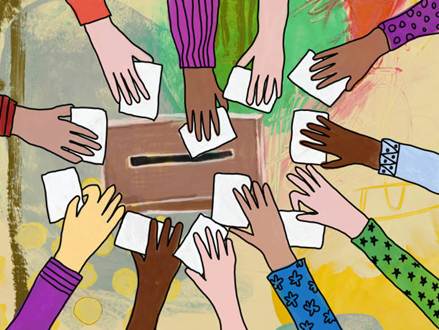
The debate surrounding the Safeguard American Voter Eligibility Act, commonly called the SAVE Act, is about far more than election paperwork. It is about the future of voting rights, the legitimacy of American elections, and the continuing political struggle over who gets to participate in our democracy.

The bill would require Americans to provide documentary proof of citizenship—such as a passport or birth certificate—when registering to vote in federal elections. Supporters argue this is a reasonable safeguard. Critics see something else entirely: a solution in search of a problem that could disenfranchise millions of eligible voters.

The political force behind the legislation is Donald Trump, who has made passage of the bill a top priority. For Trump and his allies, the SAVE Act reinforces a narrative that has defined American politics since the 2020 election. They argue that U.S. elections are vulnerable to widespread fraud and require stricter safeguards.

What Does the Evidence Say?

But the evidence tells a different story. Election officials from both parties, along with numerous studies, have consistently found that non-citizen voting is exceedingly rare. The United States already requires voters to affirm their citizenship under penalty of perjury when registering. That system was established by the National Voter Registration Act of 1993, which created a standardized federal voter registration form designed to make participation easier while still protecting the integrity of elections.

The SAVE Act would effectively rewrite that framework.

Documentary Proof Will Create Barriers to Registration

Critics warn that requiring documentary proof of citizenship will create significant barriers to registration. Millions of Americans do not have easy access to passports or original birth certificates. The burden could fall disproportionately on older voters, lower-income Americans, young people, and married women whose legal names differ from the names on their birth certificates.

In other words, the bill risks making the right to vote contingent on the ability to navigate bureaucratic documentation requirements.

Election Security vs Accessible Voting

This concern is not merely theoretical. It is rooted in constitutional law. The U.S. Supreme Court addressed a similar issue in Arizona v. Inter Tribal Council of Arizona, Inc., ruling that states could not impose additional proof-of-citizenship requirements beyond the federal registration system created by Congress. The decision underscored a key principle: federal election rules must balance election security with the constitutional commitment to accessible voting.

Legal Challenges

Should the SAVE Act become law, it would almost certainly face immediate legal challenges.

Civil-rights organizations will argue that the bill conflicts with the existing federal framework under the National Voter Registration Act of 1993. It places undue burdens on the fundamental right to vote protected by the 14th Amendment to the United States Constitution and the 15th Amendment to the United States Constitution. Courts have long held that when voting regulations significantly burden citizens, the government must show a compelling justification. Addressing a problem that rarely occurs will not meet that standard.

Will the Pursuit of Security Make It Harder for Our Citizens to Vote?

A resounding YES!

Even beyond constitutional questions, the administrative consequences could be profound. Election offices across the country—many already underfunded—would be tasked with verifying citizenship documents for millions of voters. Mistakes, delays, and inconsistent enforcement would be almost inevitable.

But the controversy surrounding the SAVE Act cannot be separated from politics. In modern American history, battles over voting rules have often reflected deeper struggles over power and representation. Measures framed as election security have frequently had the effect—or the intent—of reshaping the electorate itself.

Supporters of the SAVE Act say it is necessary to restore confidence in elections. Yet confidence is not built solely through restrictions. It is built through transparency, fairness, and a shared commitment to democratic participation.

The United States has spent decades expanding access to the ballot—from the Voting Rights Act to the modernization of voter registration. That trajectory reflects a simple democratic principle: the legitimacy of government rests on the broad participation of its citizens.

The SAVE Act asks the country to move in the opposite direction.

The real question Americans must confront is not merely whether the bill strengthens election security. It is whether the pursuit of that security justifies placing new barriers between citizens and the ballot box.

Because in a democracy, safeguarding elections should never come at the cost of making it harder for the people themselves to vote.

T.  Michael Smith

wwwtmichaelsmith.com

Trade and Tariffs

A Constitutional Line in the Sand

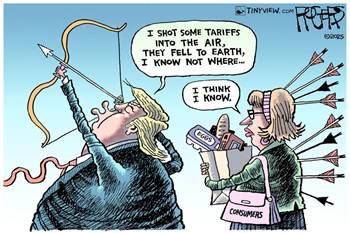
In a decision that could reshape the balance of power in Washington, the Supreme Court of the United States has ruled that the President does not have unilateral authority to impose sweeping tariffs under emergency powers. It is a rebuke not just to one administration, but to decades of congressional abdication.

The case arose from President Donald Trump’s use of the International Emergency Economic Powers Act (IEEPA) to impose broad tariffs by declaring national emergencies. The administration argued that economic threats justified aggressive executive action. The Court disagreed. Tariffs, the justices made clear, are taxes. And under Article I of the Constitution, the power to tax belongs to Congress.

This ruling is bigger than trade. It is about whether we still believe in separation of powers.

For years, Congress has quietly handed over core economic authority to the White House. Trade law became a playground for executive improvisation. Presidents of both parties discovered that by invoking “national security” or “emergency,” they could bypass deliberation and impose sweeping economic policy overnight. Markets moved. Prices rose. Allies retaliated. And lawmakers shrugged.

The Court has now drawn a line.

If the executive branch can unilaterally tax imported goods — affecting inflation, supply chains, and global diplomacy — then Congress’ constitutional power is little more than ceremonial. The justices refused to accept that logic. In doing so, they applied the same skepticism toward executive overreach that they have recently applied to federal agencies. Whether one agrees with this Court often or not, consistency in structural constitutional limits matters.

The Economic Consequences of the Decision

The economic consequences could be immediate. Businesses that paid billions in duties may seek refunds. Consumers could see relief if retaliatory trade wars cool. More importantly, companies may regain something that has been missing for years: predictability. Trade policy by presidential tweet or proclamation is volatility disguised as strength.

Politically, the ruling forces Congress to choose. Lawmakers can no longer hide behind executive action while complaining about its consequences. If tariffs are necessary, Congress must vote for them. If they are harmful, Congress must prevent them. Accountability now has a clear address.

Critics will argue that the decision weakens the presidency at a time of global competition. But the Constitution was designed precisely to slow down sweeping economic power. Taxation — especially taxation that reshapes entire industries — was never meant to rest in one person’s hands.

There is irony here. Many of the same voices that championed strong executive action on trade have criticized federal agencies for overreach. The Court’s ruling suggests that constitutional structure cannot be selectively applied. If administrative agencies must stay within clear statutory boundaries, so must the President.

Does This Change the Power Dynamic?

The deeper question is whether this moment marks a genuine recalibration of power or simply a temporary interruption. Congress has long preferred delegation because it allows members to avoid blame. Presidents prefer flexibility because it enhances leverage. The American public, meanwhile, pays the tariffs.

This ruling does not end trade disputes. It does not settle the debate over protectionism versus free markets. It does something more fundamental: it restores the constitutional premise that taxation requires legislative consent.

For a country built on the protest, taxation without representation, that principle should not be controversial.

The Court has spoken. Now Congress must decide whether it is willing to govern — or whether it will once again surrender its authority the moment the headlines fade.

T Michael Smith

wwwtmichaelsmith.com

HOW MANY DEATHS WILL IT TAKE

UNTIL ICE JUST MELTS AWAY?

A protestor in Minneapolis, one of thousands demanding that ICE end its violent occupation of the city and its abuse of immigrants and people of color, carried a simple message: Americans in 2026 still believe in the nation’s founding principles of equality and the rule of law. That belief—not chaos, not extremism—is what now fills the streets.

What is happening in Minneapolis is not a rebellion against law. It is a rebellion against lawlessness by the federal government.

When federal immigration agents shoot and kill residents during opaque enforcement operations—and then shield themselves behind jurisdictional fog, immunity doctrines, and bureaucratic delay—the problem is not protest. The problem is power without accountability, exercised by agencies overseen by Department of Homeland Security Secretary Kristi Noem and defended by a Justice Department now led by Attorney General Pam Bondi.

The killings of Renée Good and Alex Pretti did not spark unrest because Americans suddenly became radicalized. They sparked unrest because they laid bare a system in which armed federal agents operate inside U.S. cities with fewer checks than local police, weaker transparency requirements, and near-automatic protection from meaningful consequence. Minneapolis did not radicalize the country. ICE did—under leadership that has explicitly framed immigration enforcement as a show of force rather than a civil function bound by constitutional restraint.

The public response has been swift and unmistakable. Thousands marched through sub-zero streets not merely to grieve but to insist that constitutional rights do not end at the border—or at the badge of a federal agency. Protesters invoked the First Amendment, due process, equal protection, and the most basic democratic demand: if the government kills, the government must answer.

So far, that answer has been partial at best.

Under Attorney General Pam Bondi, the Department of Justice has opened a federal civil-rights investigation into the killing of Alex Pretti. That decision matters. It signals that the use of deadly force by federal agents is not automatically immune from scrutiny. But it also exposes a troubling inconsistency: no comparable investigation has been opened into the killing of Renée Good. Two deaths. One investigation. One silence.

That selectivity is not merely procedural. It is political.

Bondi’s DOJ has emphasized federal authority and jurisdictional limits while declining to explain why one killing triggers civil-rights review and another does not. At the same time, DHS—answerable to Secretary Noem—has resisted broader transparency, forcing courts to intervene simply to ensure that evidence is preserved. Accountability has not been embraced; it has been extracted under pressure.

The legal deck is stacked. Criminal prosecutions of federal officers face extraordinarily high barriers. Prosecutors must prove not only that deadly force was excessive, but that it was willfully unlawful. The Supremacy Clause allows federal agents to claim immunity from state prosecution so long as they assert they were acting within their official duties. In practice, that doctrine has become a near-automatic shield, transforming federal authority into federal insulation.

Minnesota Governor Tim Walz has demanded cooperation and accountability, while Minneapolis officials have questioned why their city is being subjected to a level of federal force more commonly associated with counterterrorism than civil immigration enforcement. Members of Congress, including Representative Pramila Jayapal and other House Judiciary Committee Democrats, are now pressing Bondi’s Justice Department to explain its selective approach to civil-rights enforcement.

Even some Republicans have voiced concern, warning that unchecked federal policing undermines public trust. That bipartisan unease underscores a central truth: this is no longer simply a debate about immigration policy. It is a debate about democratic control over armed federal power.

Civil rights groups, including the ACLU, have filed lawsuits alleging racial profiling, warrantless stops, and unconstitutional conduct by ICE and Border Patrol agents operating in Minneapolis. Yet recent Supreme Court decisions narrowing claims mean that even when constitutional violations occur, victims’ families may be left without meaningful recourse. Accountability, once again, is delayed—if it arrives at all.

This accountability crisis did not arise in a vacuum. It has been engineered, in part, by a Supreme Court that has steadily narrowed the ability of ordinary people to hold federal officials accountable for constitutional violations. In decisions written or joined by justices such as Clarence Thomas, Samuel Alito, and John Roberts, the Court has aggressively restricted claims, effectively telling victims of federal abuse that even clear violations of rights may have no remedy in court. The message has been unmistakable: federal officers can violate constitutional protections, but the courthouse doors may be closed. That judicial retreat from accountability now plays out on the streets of Minneapolis, where families are told to trust internal investigations instead of independent courts. A Constitution without enforceable remedies is not a shield, it is a suggestion. And when the Supreme Court treats accountability as optional, federal agencies learn to do the same.

Critics argue that protests like those in Minneapolis undermine order. The opposite is true. What undermines order is an enforcement regime that treats constitutional safeguards as optional, deploys militarized agents into civilian neighborhoods, and responds to public outrage with selective investigation and legal maneuvering.

The protesters are not rejecting American ideals. They are insisting that those ideals apply to everyone, including ICE Acting Director Todd Lyons, the agents he commands, and the Justice Department that decides when federal power will be restrained and when it will not.

This moment exposes a deeper truth: ICE has become an agency structurally insulated from democratic accountability. It operates across jurisdictions, blurs the line between civil enforcement and criminal policing, and relies on legal doctrines that make oversight rare and consequences rarer still. No democracy can sustain an enforcement apparatus that answers upward to political leadership but never outward to the public.

If citizens of the United States are serious about equality before the law, then accountability cannot depend on discretion exercised behind closed doors at DOJ. It must be automatic, independent, and uniform. That means mandatory federal review of all fatal uses of force by federal agents, full cooperation with state investigations, enforceable transparency standards, and consequences not just for individual officers—but for leadership failures at DHS and DOJ alike.

Minneapolis is not rejecting America. It is reminding the country what America claims to be.

In 2026, the demand echoing through the streets is not radical. It is foundational: no agency, no badge, no attorney general stands above the law. Equality without enforcement is a slogan. The rule of law without accountability is a lie. And the people of Minneapolis are no longer willing to accept either. Abolish DHS!

T. Michael Smith

wwwtmichaelsmith@gmail.com

Understanding Affordability

Why Does the Economy Feel Broken Even When the Numbers Say Otherwise?

Americans are told, repeatedly, that the economy is doing well. Unemployment is low. GDP grew at a robust 4.3 % in the third quarter of 2025, one of the fastest paces in years. Corporate profits are high, exports are rising, and consumer spending remains solid. And yet for millions of people, daily life feels more precarious, not less. Rents and home prices are still high. Health care costs are rising. Childcare is priced like a luxury. Even groceries and basic essentials put pressure on family budgets.

This disconnect isn’t imagined. It points to a deeper truth we rarely confront honestly: affordability is not the same thing as economic growth, and for decades our political and economic systems have prioritized the latter while neglecting the former.

Affordability is about power. It’s about whether wages keep pace with the costs people cannot avoid. It’s about whether consumption markets are structured to serve the public or to extract maximum profit. And it’s about political choices, who government protects, and who it leaves to fend for themselves.

Start with housing, the single largest expense for most households. Median homebuyer costs rose again in 2025, outpacing many wage gains, and rents continue to climb in most states. The Federal Housing Finance Agency’s price index shows house prices up 2.2 % year-over-year, continuing a long trend of growth.  Among the 100 largest regions in our country, 47 exceed this growth rate with some areas experiencing price growth as much as 7-9%.

Across the rental market, surveys suggest roughly 60 % of U.S. renters are “cost-burdened,” spending more than 30 % of their income on rent, with many spending around 40 %. That pressure contributes directly to economic anxiety and shrinking financial flexibility for working families.

Then there’s childcare, a cost many Americans now find more burdensome than rent in metro areas, particularly for families with multiple young children. According to recent data, the average price of childcare for two children in 2025 is roughly $29,100 per year, a 40 % increase since 2017 and significantly faster than median income growth. Child Care Aware of America’s national price data show that such costs would exceed the Department of Health and Human Services’ threshold for affordable care in most states.

Health care paints a similar picture. While official inflation numbers often headline modest increases, medical care costs are still rising faster than overall inflation, and many middle- and lower-income families are struggling with high premiums, deductibles, and out-of-pocket expenses. Reports note that insurance premiums for Affordable Care Act plans could nearly double next year as tax credits lapse, potentially pushing costs well beyond what many households can reasonably afford.

Meanwhile, necessities like food and energy have also risen faster than wages for many families, squeezing budgets from all sides. According to cost tracking studies, groceries have climbed by more than 30 % since 2019, while inflation-adjusted income gains lag slightly behind.

Defenders of the status quo often point to headline wage growth and low unemployment as proof that “things are getting better.” But averages hide reality. Many households are contending with rising costs well above inflation for essentials, while wage growth for lower- and middle-income workers remains tepid in real terms.

This is why affordability is fundamentally a political issue, not just an economic one. We have chosen deregulation over consumer protection, tax cuts over public investment, and corporate consolidation over competition. We have allowed monopolies to flourish, unions to weaken, and the social safety net to fray—all while insisting that the “free market” will somehow deliver fairness on its own.

It won’t. Markets reflect the rules we set. And right now, the rules are tilted toward those who already have the most.

A vision of affordability starts from a simple premise: people should be able to live with dignity from their work. That means raising wages and strengthening labor protections. It means building more housing and treating it as a public good. It means confronting price gouging and monopoly power. It means expanding health coverage and investing in childcare, so families aren’t forced to choose between work and care.

Affordability isn’t about handouts. It’s about whether an economy works for the many or the few. When people feel constantly squeezed, distrust grows toward institutions, toward government, and toward democracy itself. That anger doesn’t emerge in a vacuum; it’s the predictable outcome of an economy that produces abundance but distributes anxiety.

If we want to restore faith in our economic system, we need to stop congratulating ourselves on headline numbers and start asking a more basic question: can people afford to live?

Until the answer is yes, the economy is not truly strong—no matter what the charts say.

T. Michael Smith

wwwtmichaelsmith.com

America’s Economy Is Growing

But Only If You’re Standing in the Right Place

Every few weeks, a politician steps up to a podium and declares that “the economy is strong.” And in strictly mathematical terms, they’re right. The U.S. economy grew at a 3.8% annualized pace in the second quarter of 2025 — the fastest since 2023 — after dipping into negative territory earlier this year. Inflation has cooled from its post-pandemic highs, and unemployment sits near 4.4%.

But the story the numbers tell is not the story Americans are living. Because when you look closely — at who is benefitting, who is being left behind, and what lies ahead — the truth becomes clear: the U.S. economy works brilliantly if you already have wealth, stability, and assets. If you don’t, you are navigating an economic system that gives you occasional crumbs while telling you to be grateful.

The truth is this: the U.S. economy is on track for one of three futures, and each reveal who this system is built to serve. What’s striking is that in all but the rosiest scenario, working families are once again asked to carry the burden while corporations, speculators, and the ultra-wealthy skate by untouched.

1. The Best-Case Scenario: A “Soft Landing” That Still Leaves Millions Behind

In the most optimistic version of the next two years, inflation continues easing, growth stays positive, and unemployment levels off. Economists call this a “soft landing.” Sounds good — until you ask who lands softly.

Even in the best case, housing remains unaffordable, wages lag behind the real cost of living, and corporate profits continue to soar. The wealthy glide through turbulence in private jets; working Americans are crammed into economy seating, still waiting for a drink of water.

This scenario isn’t a triumph — it’s the bare minimum a functional economy should deliver. Yet we’ve been conditioned to treat stability as success because for decades both major parties have tiptoed around corporate power while leaving structural inequality intact.

In the most optimistic version of the next year or two, inflation continues drifting toward the Federal Reserve’s 2 percent target, wages grow modestly, and GDP holds steady around 2 percent. That’s the baseline many forecasters expect.

But this so-called “soft landing” doesn’t mean the economy suddenly becomes fair. It just means we avoid a recession.

Even in this best-case world, the cost of living stays punishingly high. Housing affordability remains in crisis. Healthcare remains a luxury disguised as a necessity. And while corporate profits bounce upward — as they reliably do — wage growth for most workers lags behind real costs.

A soft landing for Wall Street is not the same as a soft landing for everyone else. The economy may stabilize, but inequality keeps widening.

2. The Most Likely Scenario: Patchwork Growth for a Patchwork Nation

The more realistic outlook is a lopsided, uneven expansion — a recovery where Wall Street thrives while Main Street treads water. GDP grows, but modestly. Inflation cools, but never for the things people need. Unemployment rises just enough to make workers afraid to push for better pay.

This “patchwork growth” won’t feel like a recovery to most Americans. Families will keep juggling second jobs, skipping medical care, and draining savings. Meanwhile, companies facing mild economic uncertainty will do what they always do: tighten hiring, cut hours, and funnel more money upward through stock buybacks.

And let’s be honest — this isn’t an accident. It’s the predictable outcome of an economic system that prioritizes shareholder value over human value. We’ve allowed an entire generation to grow up believing insecurity is the natural price of capitalism. It’s not. It’s a policy choice.

The most likely scenario is simple: uneven, unequal, and deeply fragile growth. GDP increases just enough to avoid panic — about 1.7% according to median forecasts — but not enough to lift the millions who have been treading water for years.  Inflation remains sticky at around 2.7–2.8%.  That may sound tolerable, but price increases for essentials — rent, utilities, groceries, childcare — hit harder and last longer for families who already sacrifice everything just to get by.

Businesses, spooked by political instability and global tensions, respond predictably: they slow hiring, squeeze workers, and avoid wage increases. Workers feel the pinch long before CEOs do. This is the “patchwork economy” we live in — where the wealthy enjoy record stock valuations while everyone else faces rising costs and shrinking options.

This is not economic inevitability. It is the predictable outcome of forty years of deregulation, tax cuts for the wealthy, union-busting, and a bipartisan refusal to invest in the social protections Americans need.

3. The Downside Scenario: A Slow-Motion Recession That Hits the Vulnerable First

If the economy slips, it won’t be CEOs or hedge fund managers who feel the pain. A “slow-motion recession” — the third scenario — would mean rising unemployment, shrinking paychecks, and a sharp decline in consumer spending. And once again, the people who already have the least will lose the most.

Working families, still recovering from decades of wage stagnation, have no cushion left. They’ve weathered a pandemic, inflation, housing spikes, and political dysfunction. A recession, even a mild one, could tip millions into crisis. And no one should be surprised: the economy has been built this way. Recession for workers is merely a quarterly inconvenience for the wealthy.

Yet the political class will inevitably lecture us about “belt-tightening” and “budget discipline” — as if families who skipped dental care, childcare, and vacations for the last five years have any belt left to tighten.

If inflation remains stubborn, or tariffs and interest-rate pressures collide, the economy could slip into what economists politely call a “mild recession.” This would mean layoffs, reduced hours, rising unemployment, and a renewed assault on household stability.

Several major economic surveys warn that under downside conditions, 2026 real GDP could drop toward 0.9%, with recession probability between 30 and 50 percent. Unemployment could push toward 5–6% — enough to tip millions into crisis.

But recessions in America are never evenly felt. The wealthy lose some stock value, perhaps delay a vacation. Meanwhile, working families cascade from “just keeping up” to “falling behind,” to “falling apart.”

No one should pretend this would be a surprise. When an entire economic system is built on low wages, high prices, and private profit, the people at the bottom are always the shock absorbers.

The Real Question: Who Is the Economy For?

Across these scenarios, one truth holds: America’s economy functions well for the top 10%, decently for the next 30%, and unpredictably or painfully for everyone else. That is not a natural phenomenon. That is the result of choices — deregulation, tax cuts for the wealthy, union-busting, underfunded social programs, and an economic ideology obsessed with markets but allergic to fairness.

A country as wealthy as the United States should not accept an economy where millions live on the brink even during “good times.” Stability for a few is not prosperity. Growth that bypasses working people is not success. And an economy that only thrives when inequality expands is not healthy — it is predatory.

The Work Ahead

If we want a future that doesn’t simply oscillate between fragile growth and preventable hardship, we need policies that center human well-being: strong labor protections, fair taxation, affordable housing, universal healthcare, and public investment that benefits communities rather than shareholders.

The choice isn’t between growth and fairness. The choice is between an economy built for everyone — and the economy we have now.

T. Michael Smith

wwwtmichaelsmith.com

MAGA IS NOT A MOVEMENT

It’s a Warning Label for American Democracy

For years, pundits have treated “MAGA” like a marketing slogan with an attitude problem. But at this stage in American politics, it’s clear that MAGA isn’t just a hat or a rally chant. It has become a full-blown ideology built on resentment, mythmaking, and the insistence that democracy should bend to the will of one man. To pretend otherwise is to miss the central political story of our time—and the central threat facing the country.

MAGA presents itself as a grassroots uprising of “real Americans” against a corrupt elite. But scratch the surface and something very different appears: a movement convinced that the pluralistic, multiracial democracy we live in is inherently illegitimate. Its core message is unmistakable: the only valid votes are the ones cast for its own side; power lost is power stolen; institutions—from the courts to the press to elections themselves—are presumptively fraudulent unless they deliver the “correct” outcome.

This is not traditional conservatism. It is not small government or fiscal restraint. MAGA’s ideology begins and ends with a single premise: Trump is the state, and the state must serve Trump. Everything else—immigration panic, culture-war theatrics, attacks on public servants, threats of retribution—flows from that central impulse.

The cruelty isn’t incidental. It’s the brand. MAGA needs enemies because fear is the fuel that keeps the machine running. Immigrants, LGBTQ Americans, civil servants, teachers, journalists—anyone who refuses to conform to the MAGA myth of a homogenous, obedient America becomes a target. When you hear the chants about “taking our country back,” it’s worth asking from whom? The answer, often, is from fellow Americans who simply don’t look, vote, pray, or think like them.

Where Christian Nationalism Supercharges the Project

If MAGA were merely a political movement, it would be dangerous enough. But its power is magnified by the rise of Christian nationalism, which wraps authoritarian politics in religious language and moral entitlement. Christian nationalism insists that America was founded for Christians, by Christians, and must be governed through their preferred hierarchy of values. It casts secular government, pluralistic democracy, and church–state separation as threats rather than founding principles.

By fusing MAGA identity with religious destiny, the movement transforms political loyalty into a form of theological certainty. Opponents are not just wrong; they are ungodly. Democratic limits are not just inconvenient; they are immoral. This is why MAGA rhetoric so often veers into apocalyptic storytelling—claims that America faces spiritual warfare, that Trump is a chosen vessel, that compromise is betrayal of a divine plan.

When politics is reframed as holy conflict, the possibility of democratic coexistence collapses. Compromise becomes heresy; pluralism becomes an existential threat. Christian nationalism gives MAGA something every authoritarian movement seeks: a sacred justification for minority rule.

The Appeal—and the Manipulation

The tragedy is that MAGA harnesses real grievances. Millions of Americans do feel abandoned—by globalization, automation, stagnant wages, and political leaders more attuned to donors than to working families. Institutional failures are real. Economic inequality is real. Public distrust is real.

But instead of offering solutions, MAGA offers scapegoats. Instead of solidarity, it builds walls—literal and metaphorical. Instead of expanding opportunity, it narrows the definition of who belongs. It exploits pain without alleviating it, turning legitimate frustrations into fuel for a political project that leaves everyday people even more vulnerable.

For a movement that claims to fight elite power, MAGA has delivered almost nothing that helps ordinary Americans: tax cuts skewed to the wealthy, deregulation that favors corporations, culture-war diversions that do nothing to improve wages, safety, health care, or education. What it reliably delivers is spectacle—outrage cycles that keep supporters angry and the rest of the country exhausted.

Democracy as an Obstacle, Not a Value

The deeper danger is that MAGA has normalized the idea that democracy itself is optional. A functioning democracy requires more than elections; it requires shared rules of the game and a shared commitment to honoring them. MAGA rejects both. It demands loyalty not to the Constitution, but to personality. It treats the peaceful transfer of power as negotiable. It elevates conspiracy theories to the level of civic doctrine. And it conditions millions of Americans to see defeat as proof of fraud rather than a routine feature of democratic life.

The movement’s enthusiasm for purges, show trials, and loyalty tests is no accident. It is the natural outcome of a worldview that sees pluralism as weakness and dissent as treason. MAGA is trying to make authoritarianism feel familiar—almost patriotic.

A Radical Minority Movement, Not an Unstoppable Majority

One of the greatest myths surrounding MAGA is its supposed inevitability. In reality, it represents a radical minority with outsized influence because the majority often remains silent, fatigued, or intimidated. MAGA’s power grows not from broad public support but from intensity—the willingness of its followers to treat politics as a battlefield while everyone else tries to get on with their lives.

But democracies don’t survive on autopilot. They survive because enough people decide they’re worth defending.

The Choice Ahead

America has many political traditions worth celebrating. MAGA is not one of them. It is a warning label: a reminder that democracies don’t collapse only in distant countries or dusty history books. They can be hollowed out from within, one purge list at a time, one conspiracy theory at a time, one “stop the steal” at a time.

The real question now is whether the rest of us treat MAGA as an unstoppable force or what it truly is—a dangerous but minority movement that only thrives when the majority refuses to confront it.

Silence is how democracies unravel. A clear-eyed refusal to bow to fear is how they endure.

T. Michael Smith

wwwtmichaelsmith.com

WHAT IS CHRISTIAN NATIONALISM?

OLD and QUIRKY            

Christian Nationalism Is Not a Revival. It’s a Rebellion Against Democracy.

Christian nationalism is surging once again in American politics, wrapped in the familiar language of “heritage,” “values,” and “restoring the nation’s soul.” But for all its pious branding, the movement isn’t a religious awakening. It is a political project—one that uses Christian identity not to enrich public life, but to dominate it. And if we are honest, the danger it poses today is less about theology than about the erosion of democracy itself.

At its core, Christian nationalism claims that America was founded as a Christian nation and must remain one to fulfill a divine mission. Its adherents view church–state separation not as a constitutional safeguard but as a secular plot to strip Christians of their rightful authority. And they insist that public institutions—from schools to legislatures to the courts—should explicitly place Christian doctrine over democratic principles. This is not Christianity. It is a power grab dressed in scripture.

A Selective Reading of Both History and Scripture

Christian nationalists often present themselves as guardians of the founders’ intentions, but their historical narrative is as thin as it is convenient. They champion the few founders who invoked Providence while ignoring the rest who explicitly warned against entwining church and state. They elevate 18th-century moral rhetoric while erasing the radical decision to prohibit religious tests for office, separate religious institutions from state funding, and place ultimate sovereignty in “We the People,” not in any church.

Their Christianity is just as selective. Ask a Christian nationalist to quote Jesus on poverty, inequality, or mercy, and the conversation suddenly turns to “law and order.” But mention sexuality, gender, or the right to control one’s own body, and suddenly the government must act as God’s enforcer.

For all the talk of “returning to biblical principles,” you will find far more compassion in the Sermon on the Mount than in any Christian nationalist policy platform. You will find more humility in the Gospels than in their strongman politics. And you will find far more warnings about the corrupting nature of earthly power than you will endorsements of the political crusades conducted in Christ’s name.

The Movement’s True Engine: Fear

I view Christian nationalism as a project built not on faith, but on fear. Fear of demographic change. Fear of losing cultural dominance. Fear of an America where Christianity must share public space rather than occupy it.

This is why the movement’s rhetoric often centers on existential threats: the nation is “under attack,” “losing its soul,” or “being taken away.” The argument isn’t that Christian nationalists want influence—they claim they are entitled to rule.

A pluralistic democracy requires compromise, negotiation, and shared belonging. Christian nationalism rejects all three. It sanctifies one political coalition as uniquely American and casts dissenters—progressives, secular citizens, non-Christians, LGBTQ+ people, even moderate Christians—as enemies of the divine order.

This framing is not theological. It’s authoritarian.

Cruelty Rebranded as Righteousness

One of the most telling features of Christian nationalism is the moral inversion it performs. Policies that inflict harm on millions are recast as moral necessities, while policies that relieve suffering are derided as godless.

Consider the policy landscape shaped by Christian nationalist rhetoric:

  • Forced pregnancy and the dismantling of reproductive rights, even in cases of rape or danger to the mother
  • Anti-LGBTQ+ legislation, targeting transgender youth under the guise of “protection”
  • Book bans and curriculum censorship aimed at controlling cultural narratives
  • Voter suppression efforts justified by appeals to “order” or “integrity”
  • Hostility toward social programs that fight poverty but do not police morality

These policies have little to do with spiritual well-being and everything to do with enforcing a particular social hierarchy. Cruelty isn’t a byproduct—it’s the point. Because when you declare your opponents morally illegitimate, policies that harm them become acts of righteousness.

This is a politics that uses faith as a weapon, not a guide.

Faith Consumed by Politics

The tragedy—not just for democracy but for Christianity itself—is that Christian nationalism often hollows out the very faith it claims to defend. When a religion becomes fused with political identity, loyalty to the leader replaces loyalty to God. The Bible becomes a prop used to sanctify partisan agendas. Religious identity becomes a membership card rather than a spiritual path.

Historically, whenever a political movement has attempted to merge divine authority with state power, corruption has followed. Religious leaders become political operatives; political operatives become pseudo-theologians. And ordinary believers find their faith reshaped in ways that have more to do with winning elections than living out Christian values.

Democracy demands accountability. Christian nationalism demands obedience.

The Anti-Democratic Heart of the Movement

At its deepest level, I view Christian nationalism as incompatible with a multi-religious democratic republic. You cannot run a democracy when one faction believes it has been ordained by God to govern. Once politics is cast as a holy war, compromise becomes sin, elections become obstacles, and political violence becomes justifiable.

This is why scholars consistently find a troubling correlation between Christian nationalism and support for authoritarian leadership, political violence “to protect the nation,” and the belief that only certain kinds of Americans deserve full citizenship. It is why Christian nationalist rhetoric was central to the January 6 attack. It is why movements seeking minority rule often cloak themselves in religious certainty: divine authority is the only thing that can legitimize their disregard for democratic outcomes.

This movement isn’t defending democracy. It is defending dominance.

A Better Vision: Strength Through Pluralism

There is another vision of America—one rooted not in fear but in freedom.

A nation where Christians can fully practice their faith, Muslims can fully practice theirs, atheists are equally respected, and no one’s rights hinge on the doctrines of someone else’s religion.

A nation where religion is welcomed in the public square but never weaponized by the state.  Where faith communities thrive through moral persuasion, not political coercion. Where democratic institutions protect all people equally, not according to the preferences of the majority religion.

The Real Calling

In the end, the critique of Christian nationalism is simple: A democracy cannot survive when one religious faction claims a divine right to rule.

And Christianity cannot survive when it is transformed into a political instrument.

If Christian nationalism succeeds, it will not produce a more faithful nation—only a more divided, more authoritarian, and less free one. The real work of protecting both faith and democracy begins with resisting the temptation to confuse God with government, or patriotism with piety. The leader of this movement is Russell Vought, head of the office Of Management and Budget and author of Project 2025. Beware!

Because the true strength of America has never been its religious uniformity, it has been its capacity to let many voices, many beliefs, and many identities share in the promise of a nation that belongs to all of us.

T. Michael Smith

wwwtmichaelsmith.com

Who Won the Shutdown?

OLD and Quirky                                 

Republicans claimed victory. Democrats claimed pragmatism. But the real loser is democracy itself.

After 41 days of paralysis, furloughs, and fury, the federal government is finally lurching back to life. But while Washington congratulates itself for reopening the doors, Americans deserve to ask the real question: Who actually won the shutdown? The short answer is the same as it’s been for years—Republicans played hardball and Democrats blinked. The longer answer is more troubling: democracy itself lost ground.

The shutdown began as a standoff over something as basic as keeping the government funded and health care affordable. Republicans, emboldened by Trump’s renewed grip on Congress, refused to pass a budget that continued the Affordable Care Act subsidies millions rely on. Democrats, for once, stood their ground—at least at first—insisting that health care wasn’t a bargaining chip. For a moment, it seemed like they might hold together. But that moment passed.

As the weeks dragged on, pressure mounted: federal workers without paychecks, veterans missing benefits, food aid paused, airports in disarray. The human cost became unbearable. And when the breaking point came, it wasn’t the Republican leadership that cracked—it was the Democrats. Seven of them, along with an Independent, crossed the aisle to vote for a temporary deal that funded most agencies but postponed the health-care fight until December. The right called it pragmatism. The left called it surrender. Both were right.

Republicans walked away with the win they wanted. They reopened the government on their terms, without restoring the ACA subsidies that had triggered the crisis in the first place. They also sent a message: when Democrats talk about “no negotiation with hostage-takers,” they don’t really mean it. The GOP knows this game, and they play it well, manufacture a crisis, hold the economy hostage, and wait until moderates fold. It’s governing by brinkmanship, and it works because Democrats keep rewarding it.

But the political scoreboard isn’t the only thing that matters here. This shutdown exposed something deeper about the state of our democracy: we’ve normalized dysfunction. Americans barely flinched as the government shut its doors for over a month—the longest in U.S. history. The headlines were predictable, the outrage short-lived. Shutdowns are supposed to be unthinkable; now they’re routine. That’s not just bad politics; it’s a failure of civic imagination. We’ve come to expect chaos, and in that expectation, we’re losing the will to demand better.

Democrats will say they ended the shutdown to protect working families—and to a degree, that’s true. The public needed relief. But a deal that buys peace at the price of principle isn’t a victory; it’s a truce before the next defeat. By agreeing to revisit the ACA subsidies in December, they’ve simply postponed another crisis. Republicans, meanwhile, have every incentive to repeat the tactic. Why negotiate in good faith when obstruction pays dividends?

Still, this isn’t a story without hope. The divide within the Democratic Party—the progressives furious about capitulation and the moderates who claim to be realists—may yet lead to a reckoning. If Democrats want to stop losing these hostage situations, they need to stop accepting the terms. That means learning how to frame these fights not as “Washington dysfunction,” but as deliberate Republican sabotage of government itself. It means talking less about bipartisanship and more about accountability. The party that believes in government must finally learn to defend it with the same zeal that the other side shows in tearing it down.

Who won the shutdown? In the short term, Republicans. In the long term, no one—unless Democrats start treating governance not as a concession, but as a cause worth fighting for. The shutdown wasn’t just a budget dispute; it was a test of conviction. And once again, Democrats settled for survival instead of victory.

If there’s any lesson to draw, it’s this: the GOP is united by grievance, but Democrats can still be united by purpose. Ending this cycle requires courage—not just to reopen the government, but to rebuild faith that government matters. Until then, every shutdown will end the same way: with Republicans celebrating, Democrats rationalizing, and Americans paying the price.

T. Michael Smith

wwwtmichaelsmith.com