Redefining Nostalgia: The America We Need!

CARRY FORWARD THE BEST PARTS OF AMERICA!

There are Americans that want to retreat to the past because the past can feel safer, simpler, and more understandable than the present—even when the version of the past they remember never actually existed quite the way they imagine. Nostalgia can deceive us.

Several forces are at work:

  1. Nostalgia for a perceived golden age.
    People often remember the good parts of earlier decades while forgetting the problems. “America was better then!” can mean a desire for economic security, stronger communities, stable institutions, or a clearer sense of national identity—not necessarily a literal desire to recreate every aspect of the past.
  2. Fear of rapid social change.
    Technology, demographic change, immigration, changing gender roles, racial equality, and shifting cultural norms can make people feel that the country they knew is disappearing. When change happens faster than people can adapt, looking backward becomes psychologically attractive.
  3. Economic insecurity.
    For some Americans, nostalgia isn’t primarily cultural. It is economic. They remember a time when one income could support a family, manufacturing jobs were more plentiful in some communities, housing was cheaper, and college seemed attainable without enormous debt. The longing for the past can really be a longing for economic security.
  4. Loss of community.
    Churches, unions, civic organizations, neighborhood associations, local businesses, and other institutions once provided many people with a stronger sense of belonging. Their decline has left a vacuum. People sometimes respond by idealizing the era when those institutions seemed stronger.
  5. Political entrepreneurs exploit nostalgia.
    “Take America back” is an enormously powerful political message because it doesn’t require defining exactly what is being restored. It allows different people to project their own lost America onto the slogan. Politicians can then turn nostalgia into anger: Someone took your country away from you, and I will give it back.
  6. The past provides certainty.
    The future is frightening because it is unknowable. The past, by contrast, is familiar. During periods of political polarization, technological disruption, war, demographic change, or economic uncertainty, people can become more attracted to movements promising restoration rather than adaptation.
  7. Selective memory matters.
    This is perhaps the most important point. Every generation can construct a romantic version of its past. But the United States has always been conflicted and imperfect. The same periods remembered nostalgically by some Americans also contained segregation, discrimination, political violence, economic inequality, limited opportunities for women, and exclusion of entire groups from full participation in American life.

Also there is also a deeper question underneath all of this:

Do people actually want to return to the past—or do they want the benefits they associate with the past?

This is an important distinction.

Someone who says, “I want America to be like it was when I was young,” may really be saying:

I want to feel secure again. I want my community to feel connected again. I want to believe that hard work will lead somewhere. I want to understand where my country is going.

These are legitimate desires.

But the danger comes when nostalgia becomes political restorationism—the belief that America can solve contemporary problems by turning the clock backward and restoring an imagined social order. A democratic society cannot actually go backward. The world changes, technology changes, demographics change, and institutions evolve. (Reuters.org)

The better question is: What was genuinely worth preserving from the past, and how can we bring those strengths into the future without bringing back the injustices that accompanied them?

That distinction is particularly important in today’s political climate. A movement built around “Make America great again” can appeal to genuine anxieties about economic and cultural change. But nostalgia can also become a weapon when politicians define the “real America” as belonging primarily to a particular race, religion, class, or cultural tradition. Christian Nationalism is a threat to you and me.

America’s challenge isn’t to choose between the past and the future.

It is to remember the past honestly enough to learn from it—and then build something better. (The Guardian)

We can do it. The mistake is assuming that if something from the past was valuable, we must also accept the injustices that existed alongside it. America can recover certain social and economic strengths without resurrecting the inequalities of the era that produced them.

1. Stronger communities without social exclusion.

Earlier America often had tighter-knit neighborhoods, civic organizations, volunteer groups, churches, fraternal organizations, and local clubs.

Bring back: community involvement, volunteering, neighborhood organizations, and civic responsibility.

Leave behind: segregation, exclusion, and the idea that some people don’t belong in the community.

2. Economic security without discrimination.

Many Americans remember a period when a person with a high-school education could find a stable job, buy a house, support a family, and retire with some security.

Bring back: good-paying jobs, apprenticeships, unions, pensions, affordable housing, and a realistic path into the middle class.

Leave behind: racial and gender discrimination that kept many Americans from those opportunities.

The goal shouldn’t be to recreate the 1950s economy. It should be to recreate the economic security people associate with it—this time available to everyone.
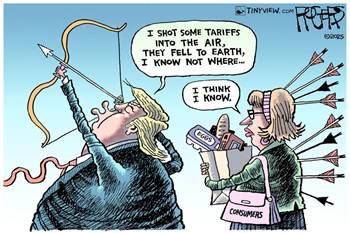
3. Manufacturing without isolationism.

American manufacturing once provided millions of relatively stable jobs and helped build communities.

Bring back: investment in American manufacturing, infrastructure, skilled trades, research, and domestic supply chains.

Leave behind: the assumption that America must isolate itself from the world to protect American workers.

A modern manufacturing renaissance can coexist with international trade.

4. Civic pride without nationalism.

There was once a stronger emphasis on citizenship, public service, and pride in contributing to the country.

Bring back: national service, community service, respect for public institutions, and a sense that citizenship carries responsibilities as well as rights.

Leave behind: the idea that criticizing America is unpatriotic—or that some Americans are more authentically American than others.

Patriotism should mean wanting your country to live up to its ideals, not pretending it has always done so.

5. Respect for institutions without blind obedience.

Previous generations often placed greater faith in institutions such as schools, courts, libraries, local government, and public agencies.

Bring back: respect for expertise, competence, public service, and the rule of law.

Leave behind: unquestioning obedience to authority.

Institutions deserve respect when they earn it, and democratic citizens must retain the right to challenge them.

6. A stronger work ethic without glorifying exploitation.

There is something valuable in the older emphasis on responsibility, craftsmanship, perseverance, and taking pride in one’s work.

Bring back: dignity of work and personal responsibility.

Leave behind: the notion that working hard automatically guarantees success or that people who struggle simply aren’t working hard enough.

A society can value individual responsibility while recognizing that wages, housing, education, healthcare, and economic opportunity also matter.

7. Better civic education.

Americans once had a stronger expectation that citizens should understand their government.

Bring back: serious civics education—Constitutional principles, history, media literacy, how Congress works, how courts work, and how citizens can participate.

Leave behind: sanitized history and the notion that America needs to be”dumbed” down.

Students should learn both America’s achievements and its failures. Understanding slavery, segregation, women’s exclusion from political life, Native American dispossession, and other injustices doesn’t weaken patriotism. It makes citizenship more informed.

8. Family stability without prescribing one family model.

There was value in emphasizing stable families and responsibility toward children.

Bring back: policies that make family life economically sustainable—paid leave, affordable childcare, decent wages, housing, and time with children.

Leave behind: the assumption that there is only one legitimate family structure or that government should dictate people’s private lives.

9. Public investment without abandoning individual responsibility

America once undertook enormous public projects: highways, schools, scientific research, public utilities, infrastructure, and institutions of higher education.

Bring back: the willingness to make long-term investments in the country’s future.

Leave behind: the idea that government must solve everything.

The strongest version is neither unlimited government nor government paralysis. It is a capable government working alongside capable citizens and businesses.

10. A belief in the future

Perhaps the greatest strength worth recovering is optimism.

Previous generations often believed America could build something better: landing people on the Moon, defeating fascism, constructing an interstate highway system, expanding educational opportunity, and creating new technologies.

Today, nostalgia sometimes tells Americans:

“The best days are behind us.”

America needs the opposite message:

“The best parts of our past are raw material for building something better.”

That means preserving community without segregation, patriotism without nationalism, economic security without exclusion, tradition without oppression, and individual responsibility without abandoning people who need help.

The real choice isn’t “old America versus new America.”

It is “Which parts of America’s past deserve to be carried forward—and which parts should finally stay in the past?”

And that distinction could make for a particularly powerful argument about why “Make America Great Again” is an incomplete political vision: America doesn’t need to go backward to recover what was good about itself.

T. Michael Smith

wwwtmichaelsmith.com

When Power STOPS Recognizing Its Limits.

The Trump Administration Is Out of Control!

There is a dangerous phrase creeping into American political life: “The president can do it because he is the president.” But this idea ignores the important concept of Limits to Presidential Power in our system of government. That is how the American republic was designed to work.

The Trump administration increasingly behaves as though the presidency is not one branch of government but the government itself—with Congress expected to comply, courts expected to get out of the way, federal agencies expected to obey personal commands, and constitutional limitations treated as inconveniences rather than boundaries.

This is bigger than Donald Trump. It is about whether America still believes in constitutional government.

And right now, the warning lights are flashing. Limits to Presidential Power seem to be eroding.

Consider the White House ballroom. The Trump administration is asking the Supreme Court to allow construction of a roughly $400 million ballroom to continue after a federal appeals court ruled that Trump lacked the unilateral authority to undertake the project without congressional approval. The court’s decision was not about whether the ballroom is attractive, useful or even necessary. It was about something much more fundamental: Who has the constitutional authority to control federal property and authorize major expenditures? (Reuters)

The answer is supposed to be Congress. But that answer increasingly seems unacceptable to this administration. (see Threats to Constitutional Balance, wwwtmichaelsmith.com).

The same pattern appears in voting. Trump issued an executive order attempting to impose sweeping new federal restrictions on mail voting and direct the Postal Service to participate in a national voter-verification system. A federal judge has now blocked key portions of that order, finding that the administration exceeded presidential authority and that the order threatened to interfere with the conduct of elections. (AP News)

Think about the constitutional implications.

The president does not get to rewrite the rules of American elections simply because Congress failed to give him what he wanted.

That is precisely why the Framers divided governmental power. They did not assume presidents would always be honorable, Congress always courageous or judges always perfect. They assumed human beings would seek power.

So, they built a system designed to make concentrated power difficult. Trump’s presidency is testing whether that system still works.

The Executive Branch Is Not the Imperial Branch.

The Constitution begins with Congress for a reason.

Article I gives Congress the legislative power—the authority to make laws, appropriate money and establish the rules under which the federal government operates.

Article II creates the presidency. That distinction matters. A president executes laws. He does not become the legislature simply because Congress is inconvenient. Nor does he acquire unlimited spending authority because he claims an emergency, acquire control over elections because he dislikes the way states administer them, or acquire the power to rewrite constitutional guarantees through executive order.

And he does not acquire the authority to ignore a court simply because he disagrees with its ruling. Yet again and again, this administration seems determined to test exactly where those boundaries lie.

Birthright citizenship provides another extraordinary example.

The Supreme Court rejected Trump’s effort to broadly eliminate birthright citizenship, reaffirming the constitutional protection associated with the 14th Amendment. Yet on August 6, Trump issued new executive orders seeking to narrow birthright citizenship through a different approach. The administration insists it is complying with the Court’s ruling; challengers argue that it is attempting to accomplish indirectly what the Court has already rejected directly. (American Immigration Council)

Whatever the ultimate legal outcome, the larger question should disturb every American:

What happens when a president treats a constitutional defeat as merely an invitation to try again with a different executive order?

That is not how constitutional government is supposed to function.

The Courts Are Becoming the Emergency Brake!

The courts have repeatedly been forced into the role of an emergency brake on executive power. That should concern conservatives as much as liberals.

Today the president may be Donald Trump. Tomorrow it could be someone whose policies conservatives despise. The constitutional principle must therefore be larger than the president. If conservatives believe presidential power is unlimited when their president is in office, they are not defending constitutional government. They are defending temporary political power. And temporary political power has a way of changing hands.

The Constitution is supposed to survive those changes.

That is why judicial independence matters. And congressional oversight matters and the separation of powers matters. The Framers rejected the very thing Trump increasingly seems to be constructing: an executive branch centered around the will of one man.

Congress Has a Responsibility Too!!

But there is another uncomfortable truth.

A president cannot accumulate this much power without Congress helping him do it—or failing to stop him. Congress was designed to be a coequal branch.

Instead, too many members of Congress have become spectators and cowards. The Constitution gives Congress enormous tools: legislation, appropriations, investigations, subpoenas, confirmations and impeachment.

Those powers mean little if legislators refuse to use them.

The Framers did not create Congress to issue press releases after the executive branch has acted. They created Congress to check the executive branch before power becomes entrenched.

If Congress surrenders its constitutional responsibilities, the president will naturally fill the vacuum. Power abhors a vacuum. Trump understands that.

This Is Bigger Than Trump!

The temptation is to dismiss all of this as another chapter in the endless Donald Trump drama.

That would be a mistake.

Trump will eventually leave office. The precedents he establishes may not. That is the danger.

Every time a president successfully stretches executive authority, the next president inherits that expanded power. All emergency power claimed today can become a tool for tomorrow’s president. And congressional authority surrendered becomes harder to reclaim.

The question is therefore not:

“Do I like Trump’s policies?”

The question is:

“Do I want any president to have this much power?”

Hopefully, the answer is no. Then this is the time that Americans must defend constitutional limits even when the president is pursuing policies they support.

That is what constitutionalism means.

The Republic Depends on Limits.

America was not founded on the principle that the strongest leader should win. It was founded on the opposite principle:

No leader is supposed to be strong enough to rule without limits.

The Framers had lived under a king. They knew what concentrated power looked like. They deliberately created a government in which ambition would collide with ambition, branch would collide with branch, and authority would be divided so that no individual could easily dominate the republic.

That system is being tested.

The Trump administration’s aggressive claims of executive authority, its repeated confrontations with the courts, its attempts to reshape election administration through executive action, its continuing battle over birthright citizenship and its fight to proceed with a major White House construction project without congressional authorization are not isolated controversies.

They are pieces of a larger question:

Does America still have a government of laws, or are we becoming a government of presidential will?

That is the line we cannot afford to cross. Because once Americans accept the idea that a president can do whatever he wants until somebody finally stops him, the Constitution has already been weakened.

The republic does not require a perfect president.

It requires something more important:

A president who understands that the office belongs to the Constitution—not the other way around.

And if the president refuses to recognize that distinction, then Congress, the courts, the states, the press and ultimately the American people must.

The Framers gave us the tools.

The question now is whether we have the courage to use them.

T. Michael Smith

wwwtmichaelsmith.com

The Threat to Constitutional Balance: Madison’s Warning

“The accumulation of all powers, legislative, executive, and judiciary, in the same hands…may justly be pronounced the very definition of tyranny.” — James Madison, Federalist No. 47 (wikipedia)

James Madison did not write those words for another country or another century. He wrote them for us.

The Framers of the Constitution were not idealists who believed good leaders would always make good decisions. They were skeptics of power. They had seen what happened when executives escaped meaningful restraints. They understood that liberty is rarely destroyed by a single dramatic event. More often, it is chipped away—one exception, one emergency, one assertion of power at a time.

That is why they built a constitutional system designed to frustrate ambition.

Today, that design is under assault.

Donald Trump has repeatedly argued, through both words and actions, that the presidency should operate with fewer constitutional restraints than the Framers intended. His administration has challenged congressional authority over federal spending, resisted oversight, tested the limits of executive authority in immigration enforcement, and frequently portrayed judicial decisions as political obstacles rather than binding constitutional judgments. Taken together, however, these controversies reveal something larger: a governing philosophy that elevates executive will over Constitutional balance.

The danger is not merely Donald Trump.

The danger is that Americans become accustomed to presidents acting as though constitutional limits are optional.

Madison anticipated exactly this temptation.

In Federalist No. 51, he explained why liberty requires conflict within government itself:

“Ambition must be made to counteract ambition.”

The Constitution was never designed to produce efficiency. It was designed to prevent domination. Congress would resist presidents. Presidents would resist Congress. Courts would restrain both. The resulting friction was not a flaw—it was the very mechanism by which freedom survives.

But friction disappears when one branch refuses to recognize the authority of another.

Congress alone possesses the constitutional power to appropriate federal funds. Article I leaves little doubt that spending decisions belong to the legislative branch. When any administration attempts to redirect, delay, or effectively rewrite congressional spending priorities through executive action, it is not merely engaging in an institutional dispute. It is testing one of the Constitution’s most fundamental separations of power.

Congressional oversight has likewise become an inconvenience to be resisted rather than a constitutional duty to be respected. Oversight is not partisan theater. It exists because the Framers knew that executive officials, left unchecked, would naturally seek greater authority. Investigations, subpoenas, inspectors general, and public accountability are constitutional safeguards—not political annoyances.

Immigration policy illustrates another constitutional tension. The executive branch possesses broad authority to enforce immigration law, but no president is exempt from constitutional constraints. The Fifth Amendment guarantees due process to “persons,” and courts have long recognized that many constitutional protections extend beyond citizenship itself. The strength of a constitutional republic is measured not by how it treats the popular or the powerful, but by whether it honors legal process when doing so is politically inconvenient.

The Fifteenth Amendment reminds us that democracy itself requires constitutional vigilance. Ratified after the Civil War, it prohibits denying or abridging the right to vote on account of race. Every election law should be judged against two constitutional obligations: protecting election integrity and ensuring equal access to the ballot. Neither objective is an excuse for abandoning the other.

Perhaps the greatest constitutional concern arises when the judiciary itself becomes a target.

Alexander Hamilton wrote in Federalist No. 78 that the courts possess “neither force nor will, but merely judgment.” Their authority depends entirely upon the willingness of the executive branch to obey lawful orders. Presidents may criticize judges. They may appeal decisions. They may seek legislative changes. But they cannot preserve constitutional government while treating judicial rulings as optional. (Ron Chernow-Hamilton)

When the executive decides which court orders deserve obedience, the rule of law becomes the rule of one person.

Trump’s defenders argue that every modern president has expanded executive power. They are right.

Franklin Roosevelt transformed the administrative state. Richard Nixon stretched presidential authority until Watergate forced constitutional reckoning. Barack Obama used executive actions when Congress was gridlocked. Joe Biden also faced repeated constitutional challenges to executive initiatives.

But this argument misunderstands the issue.

Constitutional violations do not become constitutional traditions simply because they are repeated.

Every administration that expands executive authority leaves behind powers waiting to be inherited by the next president. Each president points to the actions of his predecessor. Each expansion becomes tomorrow’s precedent. Every exception becomes tomorrow’s norm.

This is how republics decline—not in revolution, but in rationalization.

The Framers expected this.

They assumed every officeholder would want more power than the Constitution allowed. That is precisely why they divided power so carefully. They were designing a government that could survive ambitious leaders—not depend upon their restraint.

George Washington understood this better than anyone. Having defeated the world’s greatest empire, he could easily have remained in power indefinitely. Instead, he surrendered authority voluntarily because he believed republican government depended upon the peaceful transfer and limitation of power. His example became one of the nation’s first constitutional traditions.

The question confronting America today is not whether Donald Trump is uniquely responsible for constitutional erosion. He is not. Executive power has expanded for generations under presidents of both parties.

The question is whether his administration represents another step down that same path—or an acceleration so significant that it permanently alters the constitutional balance envisioned by Madison, Hamilton, and the other Framers.

Americans should answer that question with the Framers’ own words echoing in their minds.

Government was designed to restrain power—not celebrate it.

The Constitution was written to protect liberty—not personalities.

No election, no political party, and no president is more important than the Constitutional order itself.

The Framers gave future generations a republic built upon one radical idea: that law governs rulers, not the other way around.

If Americans lose that principle, they will not lose the Constitution because someone abolished it.

They will lose it because they stopped insisting that those entrusted with power obey it.

And republics rarely survive when their constitutions become merely advisory. So call your Congressman and Senators to remind that we have a CONSTITUTION for a reason and you expect them to abide with it.

T. MICHAEL SMITH

wwwtmichaelsmith.com

THE PROUD BOYS et al.

Far-right Nationalist Organizations

The Proud Boys are a far-right nationalist organization founded in 2016 by White nationalist Gavin McInnes, a media personality and co-founder of Vice Media. The group describes itself as “Western chauvinist,” arguing that Western culture is superior and should be defended. However, critics, civil rights organizations, and many researchers have characterized the group as extremist. They cite its history of political violence and associations with white nationalist and anti-democratic movements.

What the group believes

The Proud Boys generally promote nationalism and strong border enforcement. They oppose what they call “political correctness,” left-wing political movements, and traditional gender roles. They have a confrontational style of street activism.

The organization officially states that it is not white supremacist and has included members of different racial backgrounds. However, critics point to repeated collaborations and overlaps with white nationalist activists and extremist groups at various events.

Why they became nationally known

The Proud Boys gained widespread attention through frequent clashes with left-wing protesters in cities across the United States. They played a role a in political rallies during the Trump campaigns. Also, there was a 2020 presidential debate in which President Donald Trump told the group to “stand back and stand by,” a remark that generated significant controversy.

January 6 and criminal convictions

The group’s most consequential involvement was in the events surrounding the January 6 United States Capitol attack. In particular, federal prosecutors argued that several Proud Boys leaders helped organize and direct actions. These actions contributed to the breach of the Capitol.

Among those convicted was chairman Enrique Tarrio, along with other senior members. They received some of the most serious sentences handed down in connection with January 6. This happened after they were convicted of offenses including seditious conspiracy. Many were pardoned.

Why the group remains controversial

Supporters often portray the Proud Boys as a nationalist activist organization defending free speech and opposing left-wing extremism.

Critics argue that the group’s rhetoric and activities have encouraged political violence. They served as a gateway between mainstream political activism and more extreme movements. Their actions have contributed to political polarization and intimidation.

As a result, the Proud Boys occupy a significant place in debates about extremism, political violence, civil liberties, and the health of American democracy. Furthermore, their impact extends beyond the organization itself. They have become a symbol of broader tensions over nationalism, identity, and the limits of political activism in the United States.

The Proud Boys have remained active, although their activities appear different from their peak period around 2020–2021.

Recent reporting and monitoring organizations indicate that Proud Boys chapters continue to participate in demonstrations, counter-protests, and political events, particularly in states such as Florida. For example, some chapters have appeared at immigration-related demonstrations and “No Kings” protests in 2025–2026.

There have also been highly visible appearances by former Proud Boys chairman Enrique Tarrio following his release from prison. He participated in public events and marches related to January 6 commemorations and other political gatherings in 2026. (NBC4 Washington)

However, researchers who track extremist groups note that the organization is more fragmented than it was before the January 6 Capitol attack. Some chapters have split from national leadership. Local groups often operate independently. Moreover, there has been a shift in some areas from large street confrontations toward local political organizing and online activity. (AXIOS)

The group continues to be described by organizations such as the Anti-Defamation League as a right-wing extremist organization. They note its history of political violence and intimidation.

The Proud Boys occupy a somewhat different place in the far-right landscape than groups such as the Oath Keepers or Patriot Front. While there is overlap in membership, rhetoric, and political goals, the groups differ in organization, recruitment, and tactics.

The Oath Keepers

Oath Keepers have traditionally focused on recruiting current and former military personnel, law enforcement officers, and first responders.

Characteristics: more militia-oriented structure, strong anti-government ideology, emphasis on armed preparedness. Other traits include claims of defending constitutional liberties against government overreach and major involvement by members in January 6.

Unlike the Proud Boys, the Oath Keepers generally present themselves less as a street-protest movement and more as a self-styled constitutional militia.

Patriot Front

Patriot Front is generally viewed by researchers as more explicitly white nationalist than the Proud Boys.

Characteristics:  highly disciplined and centralized, uniform appearance and coordinated marches, focus on nationalist propaganda campaigns, less emphasis on spontaneous public confrontations, and strong emphasis on white identity politics.  Patriot Front’s messaging tends to be more ideological. In contrast, it is less focused on the culture-war activism associated with the Proud Boys.

Active Clubs

The “Active Club” movement is a newer trend rather than a single organization.

Characteristics: small decentralized cells, physical fitness and combat training, mixed martial arts culture, heavy emphasis on local recruitment, and attempts to avoid the public visibility that hurt older groups.

Many extremism researchers view Active Clubs as potentially significant because they focus on building networks quietly rather than seeking media attention.

The Threat Posed by Right-Wing Extremist Groups: A Summary

Right-wing extremist groups represent a continuing concern for law enforcement, researchers, and democratic institutions because some have embraced political intimidation, violence, or anti-democratic rhetoric in pursuit of their goals. While these groups vary widely in ideology and tactics, they often share a belief that the nation is under threat from political, cultural, or demographic changes and that extraordinary action is justified to stop those changes.

Groups such as the Proud Boys, Oath Keepers, and Patriot Front differ in structure and messaging, but concerns arise when members engage in political violence, harassment, armed intimidation, or efforts to undermine democratic processes. The threat is not limited to organized groups; decentralized networks and lone actors inspired by extremist ideologies can also pose significant risks.

One of the greatest dangers is the normalization of political violence. Democracies depend on citizens resolving disputes through elections, courts, public debate, and peaceful protest. When movements portray opponents as enemies rather than fellow citizens, violence can begin to appear justified to some supporters. History shows that democratic erosion often starts not with a single dramatic event but with a gradual acceptance of intimidation and political extremism.

The challenge for a democratic society is to protect constitutional rights—including free speech, assembly, and political advocacy—while responding effectively to groups or individuals who cross the line into violence, intimidation, or efforts to subvert democratic institutions. Maintaining that balance is essential to preserving both security and liberty.

T, Michael Smith

wwwtmichaelsmith.com

Corruption Normalized

The Erosion of Trust in Government

There was a time when even the appearance of corruption in government triggered outrage. A questionable business deal, political favoritism, or misuse of public office could dominate headlines for weeks. Under President Donald Trump, something more dangerous has happened: corruption itself has become background  

The problem is no longer just the individual controversies. It is the steady erosion of the boundary between public service and private enrichment.

From the beginning, the Trump political movement blurred those lines openly. Family members occupied influential White House roles while maintaining extensive business interests. Political allies cycled between government influence and private profit. Loyalists were rewarded not for competence or integrity, but for personal allegiance. The message was unmistakable: proximity to power was an opportunity to cash in.

What makes this era distinct is not simply that corruption allegations exist—every administration faces scrutiny. It is the scale of normalization. Actions that once would have triggered bipartisan alarm are now defended reflexively through partisan loyalty. If an investigation targets Trump allies, supporters call it persecution. If watchdogs raise ethical concerns, they are dismissed as political actors. The facts themselves become secondary to team identity.

That erosion has consequences far beyond Washington. When citizens believe rules apply differently to the powerful, public trust collapses. Cynicism spreads into every institution—courts, elections, Congress, even the idea of accountability itself. People stop believing government can serve the public good because too much evidence suggests it serves networks of wealth and influence instead.

The expansion of political fundraising tied to personal branding as well as the overlap between Trump-aligned media ecosystems and financial interests deepen that perception. Also, the growing role of cryptocurrency ventures connected to political figures creates further doubt.  Power increasingly looks less like public stewardship and more like an investment strategy.

And yet millions of Americans tolerate it because they see politics as tribal warfare. If their side is winning cultural or ideological battles, ethical concerns become negotiable. That is how democratic standards decay—not overnight, but through repeated excuses. Corruption survives when citizens convince themselves that protecting their faction matters more than protecting the system.   The real danger is not one politician. It is the creation of a culture where accountability itself is treated as optional.

A democracy cannot function long-term if citizens expect leaders to exploit office for personal or political gain. At some point, people stop participating honestly in civic life because they assume the game is rigged. History shows what follows: deeper polarization, institutional collapse, and eventually leaders who no longer even pretend to answer to the public. Which is what we have now.  “I don’t think about Americans’ financial situation one little bit.”   The United States is not immune to this trajectory. No nation is.

The question Americans face is no longer whether corruption exists in politics. Of course it does. The question is whether the public still cares enough to resist its normalization before the damage becomes permanent.

The ballroom project, the reported $1.7 billion investment fund tied to Jared Kushner, IRS controversies, suspiciously timed stock trades, and the $1.7 billion “slush fund” settlement all fit into the same broader criticism of the Trump-era political culture.  Public power and private gain became dangerously intertwined.

Here’s how these issues connect politically and ethically.

The Ballroom and Political Image-Making

The expansion of lavish political spaces and elite donor culture around Donald Trump symbolizes something larger than décor or branding. Critics argue it reflects a presidency deeply tied to wealth, spectacle, and transactional politics. Large donors to the project have received $50 billion in government contracts.

The criticism is not “a ballroom is corruption.” The criticism is politics increasingly centered around billionaire access, donor influence, and the fusion of luxury branding with presidential power. It feeds the idea that government is socially and financially intertwined with elite networks rather than with ordinary citizens.

The $1.7 Billion Kushner Fund

This became one of the most significant ethical flashpoints after Trump left office.

Jared Kushner’s private equity firm reportedly received a massive investment commitment from Saudi Arabia’s sovereign wealth fund after he left government service. Critics questioned whether relationships built during official U.S. diplomacy benefited Kushner financially afterward. Foreign governments viewed investment as a way to maintain influence, while anti-corruption guardrails were effectively meaningless. If foreign powers can financially reward former officials after policy decisions, public trust erodes.   Even if every action were technically lawful, many Americans see it as evidence that political access has become monetized.

IRS Immunity and Accountability Concerns

There have also been longstanding accusations that powerful political and financial figures operate under a different IRS enforcement standard than ordinary citizens. Critics cite selective investigations, delayed tax reviews, politically sensitive enforcement decisions, and a perception that wealthy elites can secure outcomes unavailable to ordinary Americans.

When political allies appear insulated from aggressive oversight, citizens begin to believe institutions are protecting power rather than enforcing rules neutrally. As an example, the DOJ has agreed to immunity for the Trump family as a part of the settlement of The Trump lawsuit against the IRS.

Stock Trades and Insider Advantage

Congressional and politically connected stock trading controversies cut across both parties. But they became part of a larger danger during the Trump era. They reinforced the idea that insiders receive privileged information, lawmakers profit during crises, and ordinary citizens are excluded from the advantages political elites enjoy.

The outrage intensified during periods of economic instability because Americans watched: markets swing violently, inflation rise, and retirement savings fluctuate. Politically connected figures often appeared financially protected—or even enriched. During the first quarter of 2026, there were a number of trades placed for Trump that appear to be insider trades. More to come!

Again, the damage is bigger than any single trade.  The belief is that the system is designed for insiders first.

THE Anti-Weaponization Fund

In May 2026, the Justice Department announced a $1.7–1.8 billion “Anti-Weaponization Fund” as part of resolving Trump’s lawsuit against the IRS over the leak of his tax records. The administration said the fund would compensate people allegedly targeted for political reasons by the government. Trump himself reportedly would not receive direct cash payments, though the agreement included a formal apology and protections related to IRS audits. (Reuters)

Critics across watchdog groups, legal analysts, and Democratic lawmakers immediately called it a “slush fund” because the commission overseeing the money would largely be appointed by Trump-aligned officials. There appeared to be limited public transparency.  Also, eligibility standards were broad, and recipients could potentially include Trump allies or January 6 defendants. (The Guardian)

Trump was effectively negotiating with agencies run by his own executive branch.

That led some legal observers to argue the arrangement resembled a collusive settlement rather than an adversarial court resolution. Judge Kathleen Williams reportedly noted there was technically “no settlement of record” filed with the court after the case dismissal. (Reddit)

Another explosive issue was the reported audit protections. Multiple reports stated the agreement would halt or restrict certain IRS audits involving Trump, his family, or affiliated businesses tied to returns filed before the settlement. Critics argued that creates the appearance of political immunity from tax enforcement. (Reuters)

How It All Connects

Each controversy can be debated on its own. Defenders argue that many actions were legal, that investigations were politically motivated, and that critics apply double standards. However, the DOJ announced this week that they are not going to move forward with the fund—it will be abandoned. But the agreements regarding audits and tax concerns would stay in place. Amnesty in perpetuity.

Collectively, these issues create a broader narrative.  Wealth gaining privileged access to government, public office becoming a pathway to private enrichment, and accountability mechanisms appearing weaker for elites. That is why these actions resonate emotionally even when legal conclusions remain disputed.

The political danger is not just corruption itself.  People stop believing government serves the public interest and start seeing it as a competition between powerful networks protecting themselves: executive power, taxpayer money, elite immunity, political loyalty networks, and weak oversight.

That combination is why opponents use terms like “grift” or “slush fund.” They see it not as ordinary governance, but as public institutions being repurposed to reward allies and shield insiders. Supporters see it as overdue retaliation against politicized government agencies.

The deeper issue underneath all of it is institutional trust. Once citizens believe legal systems and tax enforcement can be reshaped around whoever holds power, faith in neutral government starts to collapse. And when that happens, every future administration inherits a more cynical and unstable political culture. Destroying democracy happens in the aftermath.

+++++++Corruption is wrong+++++++

T. Michael Smith

wwwtmichaelsmith.com

Stop Calling Americans Ignorant

Start Fixing the Incentives That Drive Engagement

It has become a lazy reflex in politics and the media: blame “the uninformed public, they are ignorant.” If only people paid attention our problems would shrink. That story is comforting—and wrong.

What looks like ignorance is often adaptation.

The modern American is buried under a constant barrage of information: wars, elections, scandals, economic swings. Then there is streaming 24/7 through platforms like Facebook, YouTube, and TikTok. No one can process it all. So people triage. They skim headlines, trust familiar voices, and tune out what doesn’t immediately affect their lives. That’s not stupidity; it’s survival.

And here is some hard truth: being well-informed does not pay. You don’t get a raise for understanding trade policy. And you do not get rewarded for reading beyond the headline. You do, however, risk social friction for challenging your own side or raising uncomfortable facts. In a system that punishes nuance and rewards certainty, most people make the rational choice—stay at the surface. They are not ignorant, but are realists.

The information ecosystem is engineered for engagement, not truth. The algorithms driving today’s media reward outrage, simplify complexity, and feed people what they already believe. Inside those bubbles, people don’t feel uninformed—they feel validated. The result isn’t a nation of contented ignoramuses. Citizens of our nation believe they’re informed because the system keeps telling them they are. Is this being ignorant?

Then there’s the quiet force no one wants to name: resignation. After years of political gridlock, broken promises, and high-stakes crises with little visible resolution, many Americans have internalized a corrosive idea—nothing I do matters. That belief doesn’t produce curiosity. It produces withdrawal.

Add in the realities of everyday life—long hours, rising costs, family obligations—and the picture sharpens. The single parent working two jobs isn’t choosing to be ignorant; they’re choosing what keeps the lights on. Time is a prerequisite for attention, and millions simply don’t have it.

So no, the public isn’t broadly “content” in ignorant behavior. Americans are constrained by a system that makes deep engagement costly.

That distinction matters, because it points to a different solution. If you want people to re-engage, lecturing them won’t work. Neither will drowning them in more information. What moves people is relevance—when an issue hits their wallet, their safety, their family. What moves people is trust—when the message comes from someone who understands their reality. And what moves people most is agency—the belief that their action, however small, actually changes something.

The failure isn’t just on the audience. It’s on a political and media culture that confuses volume with clarity, outrage with insight, and access to information with understanding.

If we keep calling the public ignorant, we’ll keep getting the same result: a checked-out citizenry and a broken conversation. If we start asking why people disengage—and fix the incentives that drive it—we might get something better.

MAGA politicians are counting on voters’ despondency and cynicism to make the reimposition of Jim Crow a pain-free process for themselves. But Democrats’ refuse to concede and their determination to build momentum, using key events and political battles to drive organization and turnout, will aid their fight to flip the House.  Plus, it will help the long-term mission to restore democracy.

Not a perfect electorate. That’s a fantasy.

But an engaged one. That’s enough to change everything.

T. Michael Smith

wwwtmichaelsmith.com

NOT EVEN A LITTLE BIT!

I DON’T THINK ABOUT AMERICANS’ FINANCIAL SITUATIONNOT EVEN A LITTLE BIT.

The most revealing moments in politics are often not the carefully written speeches or polished campaign ads. They are the unscripted comments that slip out when a politician answers quickly and speaks plainly. Oops! What did I just say? Not even a little bit?

That is why President Donald Trump’s recent statement hit so hard.

When asked whether Americans’ financial struggles were influencing his approach to negotiations with Iran, Trump answered: “Not even a little bit… I don’t think about Americans’ financial situation. I don’t think about anybody. I think about one thing: we cannot let Iran have a nuclear weapon.”

His defenders immediately argued that critics were taking the comment out of context. They say Trump was making a national security argument, not confessing indifference to ordinary Americans. Preventing Iran from obtaining a nuclear weapon, they argue, is more important than temporary economic discomfort.

That explanation may be fair. Context matters, but in this case I believe he is speaking his truth.

Words matter too.

Americans are exhausted. Grocery bills remain high. Rent and housing costs continue to climb. Credit card debt is growing. Families are working longer hours while feeling less secure. In that environment, hearing a president say he does not think about Americans’ financial situation lands badly no matter the intended meaning. As it should!

Leadership is not only about policy decisions. It is also about empathy. People want to believe their leaders understand what life feels like outside Washington. They want to hear that someone in power sees the pressure they are under.

This is not just about Trump. The reaction to his comment exposed something deeper: a growing belief that neither party truly understands ordinary people anymore.

Democrats seized on the statement immediately. Some mocked it online. Others argued Trump had “said the quiet part out loud.” Their criticism was politically predictable, but it also resonated because many Americans already feel disconnected from the political class.

Republicans mostly defended Trump’s intent while admitting the wording was rough. Some argued the media clipped the quote unfairly. Others said presidents sometimes must prioritize security over economics. That is true. National security decisions are rarely simple.

Still, the public frustration did not come from one sentence alone. It came from years of accumulated distrust.

Congress suffers from the same problem. Approval ratings remain consistently low because Americans increasingly see lawmakers as performers rather than problem-solvers. John Thune, Mike Johnson, Chuck Schummer, and Hakeem Jeffries are all actors in a play that has no role for ordinary Americans.

People watch endless partisan fights while basic concerns like affordability, healthcare, wages, and housing are unresolved. Many voters believe politicians spend more time protecting parties, donors, and media narratives than protecting citizens.

Whether that perception is entirely fair no longer matters. In politics, trust shapes reality. 

The danger for both parties is not simply anger. It is resignation. When citizens stop believing anyone in Washington genuinely cares about their daily lives, cynicism replaces participation. People disengage. Institutions weaken. Public trust erodes further. Citizens of America need to stay angry and demand their right to speak out, demand more from these actors, and vote for change even if it is just to change.

Ordinary citizens matter. Our congressman will not hold a town meeting because he does not want to hear points of view that differ from his own. So he ignores his constituents! Political disengagement thrives when people begin to believe their voices no longer matter, that government is too corrupt, too polarized, or to engaged in foreign policy matters to respond.

The most effective antidote is consistent civic participation at the local level, where ordinary citizens still have measurable influence. Voting in every election—not just presidential races—matters, but so does attending school board meetings, city council sessions, and town halls where decisions directly affect daily life. Citizens can organize around specific issues, support independent journalism, pressure elected officials through coordinated calls and public testimony, and build community groups that reconnect neighbors across political divides.

Democracy weakens when people retreat into cynicism and passive outrage online; it strengthens when citizens treat civic engagement as an ongoing responsibility rather than a once-every-four-years event. The reality is that disengagement benefits entrenched power, while participation—even imperfect participation—forces accountability.

Americans also need to hear something simple from their leaders: “We see what you are going through.”

T. Michael Smith

wwwtmichaelsmith.com

Endless Wars!

THE HIDDEN COSTS FOR AMERICANS

Americans are trained to fear dramatic catastrophes: Pearl Harbor, 9/11, a sudden invasion, a market crash. But the greater danger to the United States may be quieter and slower. It is not one decisive war. It is being drawn into a long era of interconnected conflicts with no clear victory, no honest withdrawal plan, and no public consent equal to the cost. An endless war.

Look around. Europe remains locked in war over Ukraine. The Middle East cycles through crises that threaten to widen by the month. The US and Israel are at war with IRAN and Hezbollah. Tensions in the Pacific simmer around Taiwan and maritime power. Cyberattacks, proxy militias, sabotage, sanctions, and disinformation campaigns now blur the line between war and peace. None of these theaters exist in isolation. Each affects the others through oil prices, alliances, military stockpiles, shipping lanes, and political attention.

This is how powerful nations become trapped—not by one wrong decision, but by dozens of “limited” commitments that accumulate into permanent strain.

The first casualty is clarity. What does victory mean in these conflicts? Is it regime change? Deterrence? Territorial restoration? Stability? Containment? Humanitarian relief? Too often Washington speaks in slogans while avoiding measurable goals. If leaders cannot define success, the public should assume they are preparing for endless management rather than resolution.

The second casualty is the American household. Every prolonged global confrontation has domestic costs. Defense budgets rise. Interest payments are growing. Infrastructure waits. Housing remains unaffordable. Healthcare costs climb. Schools strain. Citizens are told there is always money for emergency deployments but never enough for ordinary life. (Understanding the Price of War on American Budgets, 04/07/2026, wwwtmichaelsmith.com).  That contradiction breeds cynicism, and cynicism is poison to democracy.

The numbers are not abstract. The United States has spent over $8 trillion on the wars in Iraq and Afghanistan and their aftermath when including long-term obligations like veterans’ care and interest on the debt. Annual defense spending now exceeds $850 billion per year, rivaling Cold War peaks without a single declared, all-encompassing conflict. Support for Ukraine alone has already surpassed $100 billion, with additional commitments likely. (Reuters.org).

And the meter is still running. The Pentagon faces hundreds of billions more to replenish weapons stockpiles sent abroad, for instance. Veterans’ care for post-9/11 service members is projected to cost another $2–three trillion in the decades ahead. Meanwhile, rising interest payments on the national debt—fueled in part by war borrowing—are now approaching $1 trillion annually. (Reuters.org)

That $8 trillion is enough to write a check for $24,000 to every man, woman, and child in America—and still have money left over. Instead, it has disappeared into wars that never clearly ended. Endless wars.

These are not distant accounting figures. They show up as higher borrowing costs, slower wage growth, deferred infrastructure, and an economy more vulnerable to shocks from global instability—especially energy and supply chains.

Put plainly: war spending does not end when the fighting slows. It compounds. The bill arrives slowly, then all at once—and it is paid not just in dollars, but in deferred opportunity.

The third casualty is constitutional culture. Permanent external threats create permanent internal temptations: more secrecy, more surveillance, more executive power, less tolerance for dissent. Criticism is reframed as weakness. Debate is treated as disloyalty. Fear becomes a governing tool.

None of this means America should retreat from the world or abandon allies. It means seriousness is required. A mature republic distinguishes between vital interests and optional entanglements. It demands clear objectives before commitments. Additionally, it shares burdens with allies instead of carrying every load alone. It uses diplomacy not as surrender, but as strategy.

Most of all, it reminds me that national strength begins at home. A country with crumbling roads, indebted families, declining trust, and political paralysis cannot indefinitely police every crisis abroad.

Empires often imagine they fall in battle. More often they fade through exhaustion from endless wars.

America’s greatest risk is not losing one war. It is normalizing a condition in which warlike crisis never ends, victory is never defined, and the bill is always sent to the future.

The question citizens should ask now is simple: What are we trying to achieve in Iran, how long will it take, and what are we neglecting while we chase it?

If leaders cannot answer plainly, the country is already drifting.

T. Michael Smith

wwwtmichaelsmith.com

Why Employment Isn’t Enough!

THE REAL COST OF LIVING!!

The latest economic data tells a story Washington loves to celebrate: unemployment remains low, layoffs are limited, and employers are still adding jobs. By traditional measures, the U.S. labor market remains strong. But for millions of Americans, that “strength” feels increasingly disconnected from daily life. Because while jobs may be plentiful, affordability is slipping away.

This is the central economic frustration of 2026. People are working, often full-time, sometimes multiple jobs, and are still struggling to stay ahead. Gas prices are climbing again. Groceries remain stubbornly expensive. Insurance, rent, utilities, and childcare continue to consume larger shares of household budgets. Inflation may look manageable in an economist’s spreadsheet, but at the kitchen table it feels relentless.

Weekly jobless claims rose only modestly to 214,000, which is still historically low and usually signals employers are not conducting widespread layoffs. March payrolls reportedly added 178,000 jobs after a February decline, reinforcing that the labor market is still generating employment. Economists describe conditions as “low-hire, low-fire”: companies are holding onto workers, but hiring has slowed. (Reuters)

What this means for everyday Americans

  • If you already have a job: You likely still have leverage and relative security.
  • If you’re job hunting: It may feel harder than unemployment numbers imply because hiring is slower.
  • If you’re a household consumer: Rising gas prices, transportation costs, and goods prices eat into wages quickly.
  • If you carry debt: Higher inflation may keep interest rates elevated longer.

That contradiction matters politically and socially. A strong labor market should create optimism. Instead, many Americans feel exhausted. Why? Because employment alone is no longer enough. Having a job used to signal stability. Today, it often signals survival. Affordability is slipping away.

The solution is not to root for a recession or mass layoffs to tame inflation. It is to build an economy where work actually restores security. That means more housing supply, stronger wage growth, lower health care and childcare costs, anti-monopoly enforcement to reduce price gouging, and tax policies that reward labor more than speculation.

America does not just need more jobs. It needs jobs that pay enough to live with dignity.

Until then, the economy may look strong on paper while feeling weak in real life. And voters know the difference.

U.S. labor markets do remain relatively strong—but the picture is more nuanced than the headline suggests. We’re in a resilient but increasingly strained economy.

What it means for the Fed

At the same time, inflation is clearly heating up. March CPI rose to 3.3% year-over-year, up sharply from 2.4% in February. The biggest driver was energy: gasoline prices jumped 21.2% in one month, the largest increase since records began in 1967. Core inflation (excluding food and energy) was more moderate at 2.6%, which suggests the broad economy is not overheating—but consumers still feel the pain at the pump and in essentials. (Bureau of Labor Statistics)

This is the Federal Reserve’s hardest scenario: jobs are holding up, but prices are reaccelerating. That reduces pressure for rate cuts and may keep borrowing costs higher for longer.

If inflation rises again, interest rates may stay higher for longer. That means pricier mortgages, car loans, credit cards, and business borrowing. So even Americans doing everything right—working, saving, paying bills—can still fall behind because the cost of basic life keeps rising.

This is why economic messaging from politicians so often misses the mark. Telling people the economy is “strong” when they can’t afford groceries or a home payment, sounds detached at best and insulting at worst. Voters do not experience the economy GDP charts or payroll reports. They experience it through rent checks, gas pumps, and overdue balances.

Bottom line

The labor market is strong enough to avoid panic, but inflation is hot enough to prevent relief. That’s not a recession—but it is an affordability squeeze. (Old and Quirky, Understanding Affordability, 12/29/2025). Americans may be working yet still feel poorer. WE need a focus from Congress on jobs that allow Americans to live with dignity, not on War both in Iran and domestically through ICE.  Is Congress for us or against us?

T. Michael Smith

wwwtmichaelsmith.com

Understanding the MAGA Platform

THE ECONOMIC IMPACT OF AMERICA FIRST POLICIES

“MAGA” — shorthand for Make America Great Again — isn’t a single policy platform so much as a cluster of political goals and instincts that coalesced around Donald Trump. If you strip away the slogans, a few core aims show up consistently.

1. Economic nationalism
A central goal is to prioritize domestic industry over global integration. That means tariffs, skepticism of free trade agreements, and efforts to bring manufacturing back to the U.S. The theory is simple: protect American jobs even if it disrupts global supply chains. This disruption often leads to higher prices.

2. Restrictionist immigration policy
MAGA emphasizes tighter border control, reduced legal immigration in some cases, and aggressive enforcement (ICE enforcement policies). The underlying argument is that sovereignty and labor market stability depend on controlling who enters the country.

3. Strong executive power
There’s a clear preference for a more assertive presidency.  Using executive authority to push policy when Congress stalls is the strategy. Supporters see this as necessary to overcome gridlock. Critics see it as a threat to institutional checks and balances. The ultimate goal is authoritarian rule.

4. Cultural conservatism
MAGA places heavy emphasis on traditional national identity, patriotism, and resistance to social change. This often includes opposition to what supporters’ call “elite” or “woke” cultural norms in media, education, and government.  

5. Skepticism of institutions
A defining feature is distrust of established institutions. This includes federal agencies to mainstream media to international alliances. Organizations like NATO are sometimes framed as burdens unless they clearly serve U.S. interests.

6. “America First” foreign policy
Less focus on multiple country deals, more emphasis on bilateral deals and reducing long-term foreign entanglements. Although in practice this has been uneven, especially when strategic or economic interests are at stake.

7.  White Male Hierarchy

As policy evolves, people of color and women occupy a contested place within the worldview associated with Make America Great Again. Supporters argue the movement is fundamentally race- and gender-neutral. It simply emphasizes nationalism, economic opportunity, and traditional values over identity-based politics.  They point to growing (though still very limited) support among some Latino and Black voters and strong backing from many conservative women. But  its policy priorities and cultural framing—on immigration, voting access, reproductive rights, and opposition to diversity initiatives—tend to disproportionately affect people of color and constrain women’s autonomy.  This view elevates a narrower vision of national identity that aligns more closely with traditional white male hierarchies. The result is a tension at the core of the movement: it seeks broad-based populist appeal yet often advances policies and narratives that many women and minority communities experience as exclusionary and discriminatory.

The Reality Check
These goals don’t always fit neatly together. For example, economic nationalism can raise prices for consumers, and limiting immigration can strain industries that rely on labor. Likewise, skepticism of institutions can energize supporters but also weaken the very systems that keep government accountable.  Exclusion of women and people of color will often be the norm particularly in voting.

So MAGA isn’t just a policy agenda. It’s a worldview: one that prioritizes national sovereignty, cultural cohesion, and centralized political will. This view diminishes or eliminates our long-standing democratic norms and global systems.

The Real Cost of “America First”

“America First” sounds simple, even intuitive. But as Make America Great Again becomes policy, its effects are anything but simple. They show up not in speeches, but in grocery aisles, rent payments, hospital bills, and classrooms across places like Virginia.

Start with the basics: food and housing. Restricting immigration and imposing tariffs—policies central to the MAGA agenda—are meant to protect American workers. But they also reduce the labor supply in agriculture and construction while raising the cost of materials. The result is predictable: groceries inch upward, housing becomes more expensive to build, and rents follow. These aren’t abstract tradeoffs; they are weekly hits to household budgets.

Wages tell a more complicated story. Some workers, particularly in manufacturing or sectors facing labor shortages, may see modest gains. But for many Americans, those gains are swallowed by rising costs. Tariffs invite retaliation, squeezing export industries. Small businesses absorb higher input costs. The promise of economic nationalism collides with the reality of a deeply interconnected global economy, where pulling one lever rarely moves just one outcome.

Healthcare reveals an even sharper edge. Efforts to cut federal spending often target programs like Medicaid, shifting the burden to states and individuals. In practice, that means fewer covered families, more strain on rural hospitals, and higher out-of-pocket costs. For working- and middle-class Americans, the safety net doesn’t disappear overnight, it frays, slowly but steadily, until a single illness becomes a financial crisis.

Then there are the less visible, but equally consequential, shifts. In education, cultural priorities reshape curricula, restrict classroom discussions, and turn local school boards into ideological battlegrounds. In governance, an expanded reliance on executive power—hallmark of leadership under Donald Trump—means policies arrive quickly but rarely last. Regulations swing with each administration. Businesses hesitate. Families struggle to plan. Stability, the quiet foundation of economic security, erodes.

Supporters of this approach argue that tradeoffs are necessary—that higher prices or reduced services are the cost of reclaiming sovereignty, strengthening borders, and restoring cultural cohesion. Nations do make choices about identity and independence. But the question is not whether there are tradeoffs. It is who bears them, and when.

Right now, the burden falls disproportionately on ordinary Americans, and it arrives immediately—in higher bills, tighter services, and greater uncertainty. The promised benefits, by contrast, are longer-term and less certain. That imbalance is the core tension of the MAGA agenda: it asks households to absorb short-term pain for gains that may or may not materialize down the road. All the while, wealthy individuals enjoy huge tax breaks.

Public policy is ultimately a matter of priorities. If the goal is to strengthen American families, then success should be measured not by slogans or geopolitical posture, but by whether those families can afford their lives, access care, educate their children, and plan for the future with confidence. On that test, the results of “America First” are far more complicated—and far more costly—than its name suggests.  The hope is that it will end and our democracy will survive much like Hungary!

T. Michael Smith

wwwtmichaelsmith.com

(Heathercoxrichardson@substack.com April 19 post regarding the start of the American Revolution)