Redefining Nostalgia: The America We Need!

CARRY FORWARD THE BEST PARTS OF AMERICA!

There are Americans that want to retreat to the past because the past can feel safer, simpler, and more understandable than the present—even when the version of the past they remember never actually existed quite the way they imagine. Nostalgia can deceive us.

Several forces are at work:

  1. Nostalgia for a perceived golden age.
    People often remember the good parts of earlier decades while forgetting the problems. “America was better then!” can mean a desire for economic security, stronger communities, stable institutions, or a clearer sense of national identity—not necessarily a literal desire to recreate every aspect of the past.
  2. Fear of rapid social change.
    Technology, demographic change, immigration, changing gender roles, racial equality, and shifting cultural norms can make people feel that the country they knew is disappearing. When change happens faster than people can adapt, looking backward becomes psychologically attractive.
  3. Economic insecurity.
    For some Americans, nostalgia isn’t primarily cultural. It is economic. They remember a time when one income could support a family, manufacturing jobs were more plentiful in some communities, housing was cheaper, and college seemed attainable without enormous debt. The longing for the past can really be a longing for economic security.
  4. Loss of community.
    Churches, unions, civic organizations, neighborhood associations, local businesses, and other institutions once provided many people with a stronger sense of belonging. Their decline has left a vacuum. People sometimes respond by idealizing the era when those institutions seemed stronger.
  5. Political entrepreneurs exploit nostalgia.
    “Take America back” is an enormously powerful political message because it doesn’t require defining exactly what is being restored. It allows different people to project their own lost America onto the slogan. Politicians can then turn nostalgia into anger: Someone took your country away from you, and I will give it back.
  6. The past provides certainty.
    The future is frightening because it is unknowable. The past, by contrast, is familiar. During periods of political polarization, technological disruption, war, demographic change, or economic uncertainty, people can become more attracted to movements promising restoration rather than adaptation.
  7. Selective memory matters.
    This is perhaps the most important point. Every generation can construct a romantic version of its past. But the United States has always been conflicted and imperfect. The same periods remembered nostalgically by some Americans also contained segregation, discrimination, political violence, economic inequality, limited opportunities for women, and exclusion of entire groups from full participation in American life.

Also there is also a deeper question underneath all of this:

Do people actually want to return to the past—or do they want the benefits they associate with the past?

This is an important distinction.

Someone who says, “I want America to be like it was when I was young,” may really be saying:

I want to feel secure again. I want my community to feel connected again. I want to believe that hard work will lead somewhere. I want to understand where my country is going.

These are legitimate desires.

But the danger comes when nostalgia becomes political restorationism—the belief that America can solve contemporary problems by turning the clock backward and restoring an imagined social order. A democratic society cannot actually go backward. The world changes, technology changes, demographics change, and institutions evolve. (Reuters.org)

The better question is: What was genuinely worth preserving from the past, and how can we bring those strengths into the future without bringing back the injustices that accompanied them?

That distinction is particularly important in today’s political climate. A movement built around “Make America great again” can appeal to genuine anxieties about economic and cultural change. But nostalgia can also become a weapon when politicians define the “real America” as belonging primarily to a particular race, religion, class, or cultural tradition. Christian Nationalism is a threat to you and me.

America’s challenge isn’t to choose between the past and the future.

It is to remember the past honestly enough to learn from it—and then build something better. (The Guardian)

We can do it. The mistake is assuming that if something from the past was valuable, we must also accept the injustices that existed alongside it. America can recover certain social and economic strengths without resurrecting the inequalities of the era that produced them.

1. Stronger communities without social exclusion.

Earlier America often had tighter-knit neighborhoods, civic organizations, volunteer groups, churches, fraternal organizations, and local clubs.

Bring back: community involvement, volunteering, neighborhood organizations, and civic responsibility.

Leave behind: segregation, exclusion, and the idea that some people don’t belong in the community.

2. Economic security without discrimination.

Many Americans remember a period when a person with a high-school education could find a stable job, buy a house, support a family, and retire with some security.

Bring back: good-paying jobs, apprenticeships, unions, pensions, affordable housing, and a realistic path into the middle class.

Leave behind: racial and gender discrimination that kept many Americans from those opportunities.

The goal shouldn’t be to recreate the 1950s economy. It should be to recreate the economic security people associate with it—this time available to everyone.
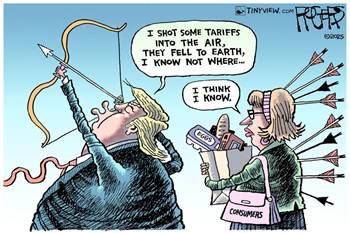
3. Manufacturing without isolationism.

American manufacturing once provided millions of relatively stable jobs and helped build communities.

Bring back: investment in American manufacturing, infrastructure, skilled trades, research, and domestic supply chains.

Leave behind: the assumption that America must isolate itself from the world to protect American workers.

A modern manufacturing renaissance can coexist with international trade.

4. Civic pride without nationalism.

There was once a stronger emphasis on citizenship, public service, and pride in contributing to the country.

Bring back: national service, community service, respect for public institutions, and a sense that citizenship carries responsibilities as well as rights.

Leave behind: the idea that criticizing America is unpatriotic—or that some Americans are more authentically American than others.

Patriotism should mean wanting your country to live up to its ideals, not pretending it has always done so.

5. Respect for institutions without blind obedience.

Previous generations often placed greater faith in institutions such as schools, courts, libraries, local government, and public agencies.

Bring back: respect for expertise, competence, public service, and the rule of law.

Leave behind: unquestioning obedience to authority.

Institutions deserve respect when they earn it, and democratic citizens must retain the right to challenge them.

6. A stronger work ethic without glorifying exploitation.

There is something valuable in the older emphasis on responsibility, craftsmanship, perseverance, and taking pride in one’s work.

Bring back: dignity of work and personal responsibility.

Leave behind: the notion that working hard automatically guarantees success or that people who struggle simply aren’t working hard enough.

A society can value individual responsibility while recognizing that wages, housing, education, healthcare, and economic opportunity also matter.

7. Better civic education.

Americans once had a stronger expectation that citizens should understand their government.

Bring back: serious civics education—Constitutional principles, history, media literacy, how Congress works, how courts work, and how citizens can participate.

Leave behind: sanitized history and the notion that America needs to be”dumbed” down.

Students should learn both America’s achievements and its failures. Understanding slavery, segregation, women’s exclusion from political life, Native American dispossession, and other injustices doesn’t weaken patriotism. It makes citizenship more informed.

8. Family stability without prescribing one family model.

There was value in emphasizing stable families and responsibility toward children.

Bring back: policies that make family life economically sustainable—paid leave, affordable childcare, decent wages, housing, and time with children.

Leave behind: the assumption that there is only one legitimate family structure or that government should dictate people’s private lives.

9. Public investment without abandoning individual responsibility

America once undertook enormous public projects: highways, schools, scientific research, public utilities, infrastructure, and institutions of higher education.

Bring back: the willingness to make long-term investments in the country’s future.

Leave behind: the idea that government must solve everything.

The strongest version is neither unlimited government nor government paralysis. It is a capable government working alongside capable citizens and businesses.

10. A belief in the future

Perhaps the greatest strength worth recovering is optimism.

Previous generations often believed America could build something better: landing people on the Moon, defeating fascism, constructing an interstate highway system, expanding educational opportunity, and creating new technologies.

Today, nostalgia sometimes tells Americans:

“The best days are behind us.”

America needs the opposite message:

“The best parts of our past are raw material for building something better.”

That means preserving community without segregation, patriotism without nationalism, economic security without exclusion, tradition without oppression, and individual responsibility without abandoning people who need help.

The real choice isn’t “old America versus new America.”

It is “Which parts of America’s past deserve to be carried forward—and which parts should finally stay in the past?”

And that distinction could make for a particularly powerful argument about why “Make America Great Again” is an incomplete political vision: America doesn’t need to go backward to recover what was good about itself.

T. Michael Smith

wwwtmichaelsmith.com

The National Debt Myth

The One That Keeps the Rich On Top

Every time Democrats propose spending money to keep people housed, fed, healthy, or alive, the same chorus rises from the right: What about the debt? Suddenly, Republicans discover a deep and abiding concern for future generations. Oh my, the national credit card is “maxed out.” Suddenly, math becomes a moral cudgel.

This ritual is not about fiscal responsibility. It is about power.

Let’s start with a distinction conservatives routinely blur because clarity would weaken their argument: deficits and debt are not the same thing. The deficit is the yearly gap between spending and revenue. The debt is the cumulative result of past deficits. Pretending they are interchangeable allows any new spending—no matter how necessary—to be framed as permanent, catastrophic excess.

This sleight of hand is especially rich coming from the party that exploded deficits with repeated tax cuts for the wealthy, two unfunded wars, and a ballooning defense budget it refuses to scrutinize. When Republicans slash taxes for billionaires or shovel money into the Pentagon, the debt magically stops mattering. When children get a tax credit or families get healthcare, the sky is suddenly falling.

The United States is not a household. It does not “run out of money.” It issues debt in its own currency, the global reserve currency, and is backed by the largest economy on Earth. There is no hard ceiling where the U.S. suddenly goes broke. After World War II, national debt exceeded 120 percent of GDP—higher than today. The solution was not austerity. It was massive public investment that built the modern middle class. Growth, not cuts, brought the debt down.

What actually limits debt is not ideology, but economic reality. If the economy grows and inflation is controlled, higher debt levels are sustainable. The real risk is interest costs overwhelming public priorities—but that danger is driven far more by Congress’s refusal to tax wealth and capital than by spending on social programs.

Here is the uncomfortable truth Republicans won’t say out loud: the debt panic is selective by design. It is deployed to block redistribution downward while protecting redistribution upward. It is why there is always money for corporate bailouts, border militarization, and endless war—but never enough for housing, childcare, or universal healthcare. Debt isn’t the problem. The beneficiaries are.

Democratic politics starts from a simple, radical premise: survival comes first. People cannot participate in markets, democracy, or “personal responsibility” if they are sick, homeless, or starving. Spending to stabilize lives is not reckless, it is foundational. Debt that is used to invest in people pays dividends in productivity, public health, and social cohesion. Debt used to entrench inequality does the opposite.

The real fiscal crisis in America is not overspending. It is a rigged revenue system that lets vast fortunes compound untaxed while lawmakers pretend the only lever left is cutting food assistance or healthcare. We don’t have a debt problem. We have a governing class that refuses to confront wealth and would rather punish the poor than challenge donors.

So how high can the U.S. national debt go? Higher than today. Higher than conservatives admit when it suits them. The real question is not how much debt we carry, but what kind of society we are financing.

A country that can always afford tax cuts for the rich and violence abroad—but pleads poverty when asked to care for its own people—is not fiscally constrained. It is morally bankrupt.

Debt is a tool. Right now, it’s being wielded to preserve inequality and block progress. That’s not economics. That’s ideology pretending to be arithmetic.

T. Michael Smith

wwwtmichaelsnith.com

Understanding Affordability

Why Does the Economy Feel Broken Even When the Numbers Say Otherwise?

Americans are told, repeatedly, that the economy is doing well. Unemployment is low. GDP grew at a robust 4.3 % in the third quarter of 2025, one of the fastest paces in years. Corporate profits are high, exports are rising, and consumer spending remains solid. And yet for millions of people, daily life feels more precarious, not less. Rents and home prices are still high. Health care costs are rising. Childcare is priced like a luxury. Even groceries and basic essentials put pressure on family budgets.

This disconnect isn’t imagined. It points to a deeper truth we rarely confront honestly: affordability is not the same thing as economic growth, and for decades our political and economic systems have prioritized the latter while neglecting the former.

Affordability is about power. It’s about whether wages keep pace with the costs people cannot avoid. It’s about whether consumption markets are structured to serve the public or to extract maximum profit. And it’s about political choices, who government protects, and who it leaves to fend for themselves.

Start with housing, the single largest expense for most households. Median homebuyer costs rose again in 2025, outpacing many wage gains, and rents continue to climb in most states. The Federal Housing Finance Agency’s price index shows house prices up 2.2 % year-over-year, continuing a long trend of growth.  Among the 100 largest regions in our country, 47 exceed this growth rate with some areas experiencing price growth as much as 7-9%.

Across the rental market, surveys suggest roughly 60 % of U.S. renters are “cost-burdened,” spending more than 30 % of their income on rent, with many spending around 40 %. That pressure contributes directly to economic anxiety and shrinking financial flexibility for working families.

Then there’s childcare, a cost many Americans now find more burdensome than rent in metro areas, particularly for families with multiple young children. According to recent data, the average price of childcare for two children in 2025 is roughly $29,100 per year, a 40 % increase since 2017 and significantly faster than median income growth. Child Care Aware of America’s national price data show that such costs would exceed the Department of Health and Human Services’ threshold for affordable care in most states.

Health care paints a similar picture. While official inflation numbers often headline modest increases, medical care costs are still rising faster than overall inflation, and many middle- and lower-income families are struggling with high premiums, deductibles, and out-of-pocket expenses. Reports note that insurance premiums for Affordable Care Act plans could nearly double next year as tax credits lapse, potentially pushing costs well beyond what many households can reasonably afford.

Meanwhile, necessities like food and energy have also risen faster than wages for many families, squeezing budgets from all sides. According to cost tracking studies, groceries have climbed by more than 30 % since 2019, while inflation-adjusted income gains lag slightly behind.

Defenders of the status quo often point to headline wage growth and low unemployment as proof that “things are getting better.” But averages hide reality. Many households are contending with rising costs well above inflation for essentials, while wage growth for lower- and middle-income workers remains tepid in real terms.

This is why affordability is fundamentally a political issue, not just an economic one. We have chosen deregulation over consumer protection, tax cuts over public investment, and corporate consolidation over competition. We have allowed monopolies to flourish, unions to weaken, and the social safety net to fray—all while insisting that the “free market” will somehow deliver fairness on its own.

It won’t. Markets reflect the rules we set. And right now, the rules are tilted toward those who already have the most.

A vision of affordability starts from a simple premise: people should be able to live with dignity from their work. That means raising wages and strengthening labor protections. It means building more housing and treating it as a public good. It means confronting price gouging and monopoly power. It means expanding health coverage and investing in childcare, so families aren’t forced to choose between work and care.

Affordability isn’t about handouts. It’s about whether an economy works for the many or the few. When people feel constantly squeezed, distrust grows toward institutions, toward government, and toward democracy itself. That anger doesn’t emerge in a vacuum; it’s the predictable outcome of an economy that produces abundance but distributes anxiety.

If we want to restore faith in our economic system, we need to stop congratulating ourselves on headline numbers and start asking a more basic question: can people afford to live?

Until the answer is yes, the economy is not truly strong—no matter what the charts say.

T. Michael Smith

wwwtmichaelsmith.com

America’s Economy Is Growing

But Only If You’re Standing in the Right Place

Every few weeks, a politician steps up to a podium and declares that “the economy is strong.” And in strictly mathematical terms, they’re right. The U.S. economy grew at a 3.8% annualized pace in the second quarter of 2025 — the fastest since 2023 — after dipping into negative territory earlier this year. Inflation has cooled from its post-pandemic highs, and unemployment sits near 4.4%.

But the story the numbers tell is not the story Americans are living. Because when you look closely — at who is benefitting, who is being left behind, and what lies ahead — the truth becomes clear: the U.S. economy works brilliantly if you already have wealth, stability, and assets. If you don’t, you are navigating an economic system that gives you occasional crumbs while telling you to be grateful.

The truth is this: the U.S. economy is on track for one of three futures, and each reveal who this system is built to serve. What’s striking is that in all but the rosiest scenario, working families are once again asked to carry the burden while corporations, speculators, and the ultra-wealthy skate by untouched.

1. The Best-Case Scenario: A “Soft Landing” That Still Leaves Millions Behind

In the most optimistic version of the next two years, inflation continues easing, growth stays positive, and unemployment levels off. Economists call this a “soft landing.” Sounds good — until you ask who lands softly.

Even in the best case, housing remains unaffordable, wages lag behind the real cost of living, and corporate profits continue to soar. The wealthy glide through turbulence in private jets; working Americans are crammed into economy seating, still waiting for a drink of water.

This scenario isn’t a triumph — it’s the bare minimum a functional economy should deliver. Yet we’ve been conditioned to treat stability as success because for decades both major parties have tiptoed around corporate power while leaving structural inequality intact.

In the most optimistic version of the next year or two, inflation continues drifting toward the Federal Reserve’s 2 percent target, wages grow modestly, and GDP holds steady around 2 percent. That’s the baseline many forecasters expect.

But this so-called “soft landing” doesn’t mean the economy suddenly becomes fair. It just means we avoid a recession.

Even in this best-case world, the cost of living stays punishingly high. Housing affordability remains in crisis. Healthcare remains a luxury disguised as a necessity. And while corporate profits bounce upward — as they reliably do — wage growth for most workers lags behind real costs.

A soft landing for Wall Street is not the same as a soft landing for everyone else. The economy may stabilize, but inequality keeps widening.

2. The Most Likely Scenario: Patchwork Growth for a Patchwork Nation

The more realistic outlook is a lopsided, uneven expansion — a recovery where Wall Street thrives while Main Street treads water. GDP grows, but modestly. Inflation cools, but never for the things people need. Unemployment rises just enough to make workers afraid to push for better pay.

This “patchwork growth” won’t feel like a recovery to most Americans. Families will keep juggling second jobs, skipping medical care, and draining savings. Meanwhile, companies facing mild economic uncertainty will do what they always do: tighten hiring, cut hours, and funnel more money upward through stock buybacks.

And let’s be honest — this isn’t an accident. It’s the predictable outcome of an economic system that prioritizes shareholder value over human value. We’ve allowed an entire generation to grow up believing insecurity is the natural price of capitalism. It’s not. It’s a policy choice.

The most likely scenario is simple: uneven, unequal, and deeply fragile growth. GDP increases just enough to avoid panic — about 1.7% according to median forecasts — but not enough to lift the millions who have been treading water for years.  Inflation remains sticky at around 2.7–2.8%.  That may sound tolerable, but price increases for essentials — rent, utilities, groceries, childcare — hit harder and last longer for families who already sacrifice everything just to get by.

Businesses, spooked by political instability and global tensions, respond predictably: they slow hiring, squeeze workers, and avoid wage increases. Workers feel the pinch long before CEOs do. This is the “patchwork economy” we live in — where the wealthy enjoy record stock valuations while everyone else faces rising costs and shrinking options.

This is not economic inevitability. It is the predictable outcome of forty years of deregulation, tax cuts for the wealthy, union-busting, and a bipartisan refusal to invest in the social protections Americans need.

3. The Downside Scenario: A Slow-Motion Recession That Hits the Vulnerable First

If the economy slips, it won’t be CEOs or hedge fund managers who feel the pain. A “slow-motion recession” — the third scenario — would mean rising unemployment, shrinking paychecks, and a sharp decline in consumer spending. And once again, the people who already have the least will lose the most.

Working families, still recovering from decades of wage stagnation, have no cushion left. They’ve weathered a pandemic, inflation, housing spikes, and political dysfunction. A recession, even a mild one, could tip millions into crisis. And no one should be surprised: the economy has been built this way. Recession for workers is merely a quarterly inconvenience for the wealthy.

Yet the political class will inevitably lecture us about “belt-tightening” and “budget discipline” — as if families who skipped dental care, childcare, and vacations for the last five years have any belt left to tighten.

If inflation remains stubborn, or tariffs and interest-rate pressures collide, the economy could slip into what economists politely call a “mild recession.” This would mean layoffs, reduced hours, rising unemployment, and a renewed assault on household stability.

Several major economic surveys warn that under downside conditions, 2026 real GDP could drop toward 0.9%, with recession probability between 30 and 50 percent. Unemployment could push toward 5–6% — enough to tip millions into crisis.

But recessions in America are never evenly felt. The wealthy lose some stock value, perhaps delay a vacation. Meanwhile, working families cascade from “just keeping up” to “falling behind,” to “falling apart.”

No one should pretend this would be a surprise. When an entire economic system is built on low wages, high prices, and private profit, the people at the bottom are always the shock absorbers.

The Real Question: Who Is the Economy For?

Across these scenarios, one truth holds: America’s economy functions well for the top 10%, decently for the next 30%, and unpredictably or painfully for everyone else. That is not a natural phenomenon. That is the result of choices — deregulation, tax cuts for the wealthy, union-busting, underfunded social programs, and an economic ideology obsessed with markets but allergic to fairness.

A country as wealthy as the United States should not accept an economy where millions live on the brink even during “good times.” Stability for a few is not prosperity. Growth that bypasses working people is not success. And an economy that only thrives when inequality expands is not healthy — it is predatory.

The Work Ahead

If we want a future that doesn’t simply oscillate between fragile growth and preventable hardship, we need policies that center human well-being: strong labor protections, fair taxation, affordable housing, universal healthcare, and public investment that benefits communities rather than shareholders.

The choice isn’t between growth and fairness. The choice is between an economy built for everyone — and the economy we have now.

T. Michael Smith

wwwtmichaelsmith.com